
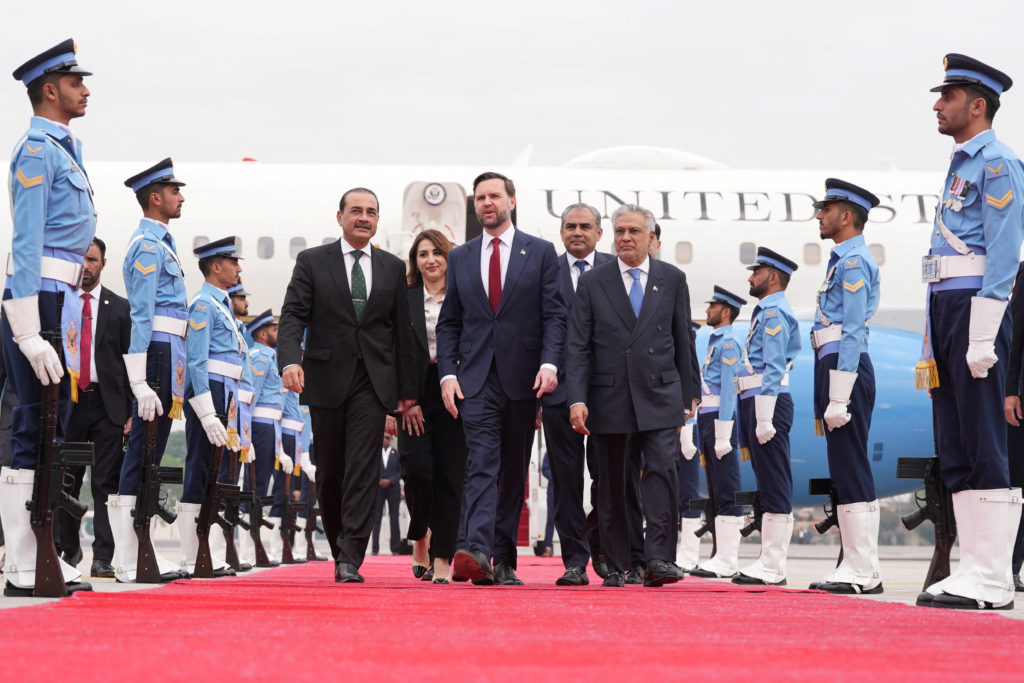
The United States and Iran continued direct negotiations in Pakistan into the early hours of Sunday, extending a rare diplomatic engagement that comes just days after a fragile two-week ceasefire was announced. The talks reflect a high-stakes effort to prevent renewed escalation and keep open a narrow channel for diplomacy between two long-hostile governments.
What Happened
American and Iranian officials met face-to-face in Pakistan and kept talking past midnight, underscoring the urgency of the discussions. The negotiations followed the announcement of a temporary ceasefire that has eased immediate tensions but remains vulnerable to collapse if either side judges the arrangement to be failing.
Direct contact between Washington and Tehran is unusual and politically sensitive. When it does occur, it often signals that both sides see a limited but important opportunity to manage a crisis before it worsens. Holding talks in a third country also provides a neutral setting for confidential diplomacy away from the intense pressure of domestic politics.
Background
The United States and Iran have had no formal diplomatic relations for decades, and communication between the two governments has frequently been indirect, involving intermediaries or back-channel contacts. Their relationship has been shaped by disputes over sanctions, regional influence, military incidents, and concerns over Iran’s nuclear program.
Ceasefires in Middle East flashpoints are often fragile because they depend on restraint from armed actors and confidence that opposing sides will not use the pause to prepare for further conflict. Even short periods of calm can become politically significant if they create room for negotiations, prisoner exchanges, humanitarian access, or steps to avoid wider war.
Pakistan has often served as a diplomatic venue for sensitive international discussions because it sits at the crossroads of South Asia, the Middle East, and broader security interests. Hosting talks there can help participants avoid the optics of negotiating on each other’s turf while maintaining a level of discretion that is difficult to achieve in public forums.
Why It Matters
Any sustained U.S.-Iran dialogue carries global significance because the relationship affects energy markets, regional security, shipping lanes, and the broader balance of power in the Middle East. A breakdown in talks could quickly raise the risk of confrontation, while even modest progress could reduce uncertainty in a volatile region.
For Panama and Latin America, the most immediate connection is indirect but real: instability in the Middle East can affect oil prices, shipping costs, and inflation, all of which matter to economies that rely heavily on imported fuel and international trade. Panama’s position as a global logistics hub also makes it sensitive to disruptions that ripple through maritime routes and commodity markets.
The talks in Pakistan are a reminder that even after a ceasefire, the hard work of preventing renewed conflict usually happens far from the battlefield. Whether the negotiations produce a durable understanding or only a temporary pause will shape how much risk the region — and the world — must continue to absorb.