
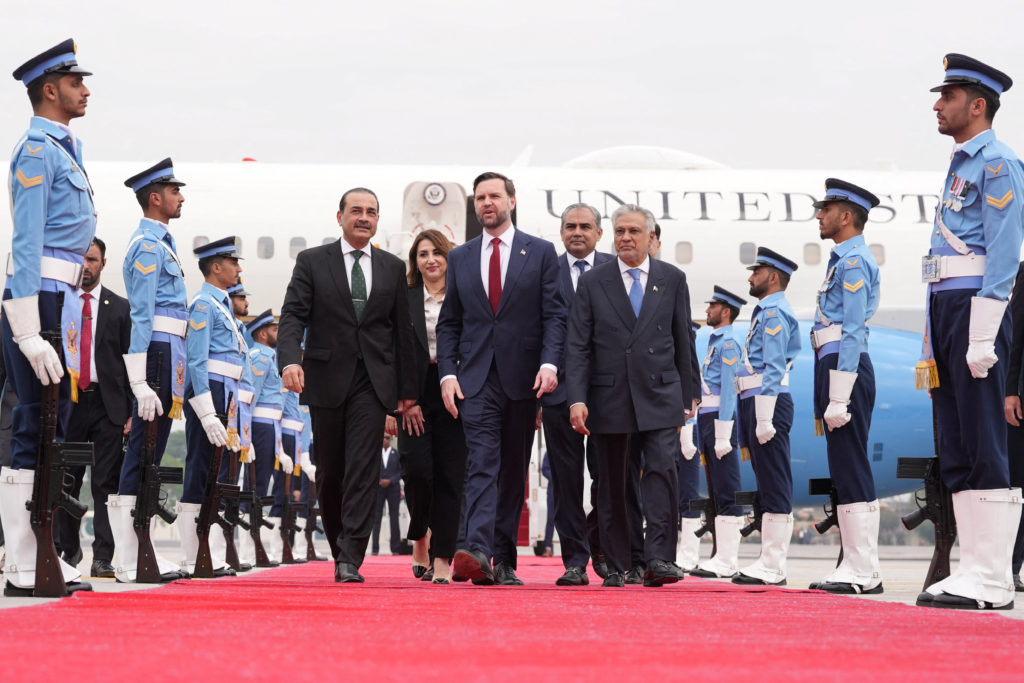
The United States and Iran have begun direct face-to-face negotiations in Pakistan, marking a rare diplomatic opening just days after a fragile two-week ceasefire was announced. The talks come at a tense moment in a conflict whose wider consequences have raised alarm across the Middle East and beyond.
What Happened
U.S. and Iranian officials met in Pakistan on Saturday for direct negotiations. The discussions are unfolding against the backdrop of a ceasefire that was announced only days earlier and remains under strain.
Direct contact between Washington and Tehran is notable because the two governments have had deeply adversarial relations for decades, with negotiations often occurring indirectly through intermediaries. Face-to-face talks in a third country signal an effort to test whether a broader diplomatic channel can reduce the risk of renewed fighting.
The ceasefire itself is only two weeks old, making the talks especially delicate. Any breakdown in the agreement could quickly reignite the conflict and widen instability in the region.
Background
The United States and Iran have long been locked in confrontation over security, regional influence, and nuclear concerns. Their relationship has been shaped by sanctions, military posturing, and repeated diplomatic standoffs. When direct negotiations do occur, they are often viewed as a critical moment because they can either open the door to de-escalation or collapse under mutual distrust.
Pakistan has frequently served as a venue for sensitive regional diplomacy because of its strategic position and its ties to a range of actors in the Middle East and South Asia. Hosting talks there allows both sides to meet outside their own political environments while still remaining in a region where the consequences of conflict are felt most directly.
Ceasefires in conflicts involving Iran and the United States have often proved difficult to sustain without broader political agreement. Military pauses can reduce immediate violence, but they do not resolve the deeper disputes that drive confrontation. That makes the current negotiations significant even if they are only an initial step.
Why It Matters
The talks matter because any U.S.-Iran breakthrough could help prevent a wider regional war, ease pressure on global energy markets, and reduce the risk of further destabilization in the Middle East. If the ceasefire holds and the negotiations advance, they could create space for more sustained diplomacy after a period of acute danger.
For Panama and Latin America, the relevance is indirect but real. Major conflict in the Middle East can affect oil prices, shipping costs, insurance rates, and broader trade conditions, all of which can ripple through economies that depend on maritime commerce and imported fuel. Stability in a key global flashpoint is therefore not only a regional concern but also a global economic one.
The talks also carry geopolitical weight beyond the immediate conflict. Any sign that Washington and Tehran can engage directly may influence how other powers approach crisis management, ceasefire enforcement, and future negotiations over security issues in the region.