
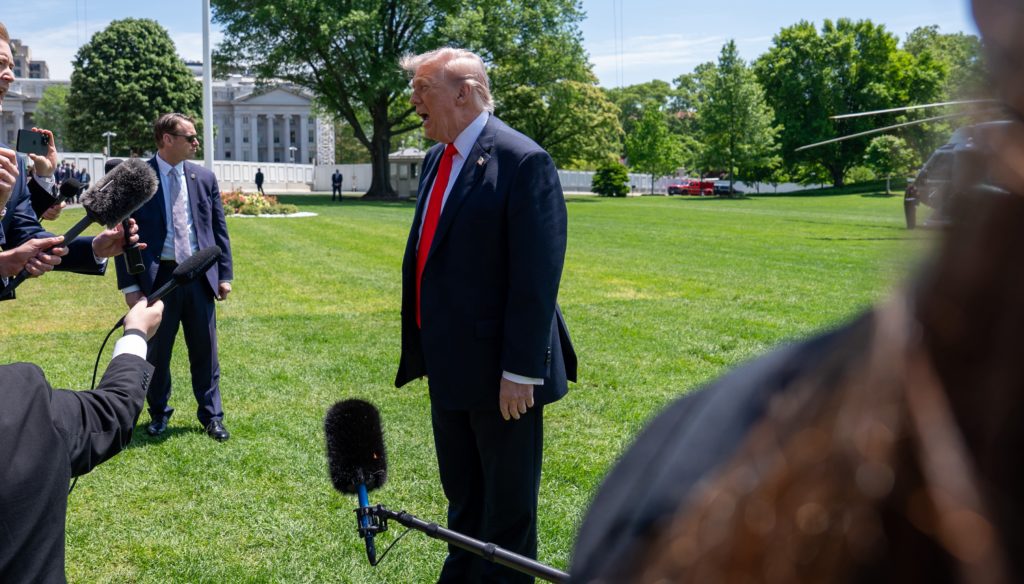
President Donald Trump said he was not satisfied with Iran’s latest proposal to end the war between the two countries, keeping hopes for an immediate diplomatic breakthrough dim as the conflict grinds on. The remark signals that negotiations remain stalled at a moment when the fighting has already raised global alarm over the risk of a wider regional escalation.
What Happened
Trump dismissed Iran’s proposal on Friday and blamed what he described as the country’s “fractured” leadership. His comments indicate that Washington does not view the current offer as sufficient to halt the conflict, even as pressure builds for a negotiated path forward.
The statement adds another layer of uncertainty to a war that has already unsettled governments across the Middle East and beyond. With no sign of agreement, the confrontation appears set to continue while diplomatic channels remain under strain.
Background
Wars involving Iran carry immediate consequences far outside the conflict zone because of the country’s strategic position, its influence across the region and the potential impact on energy markets, shipping routes and security calculations from Europe to Latin America. Any direct clash involving the United States and Iran also raises the danger of regional spillover through allied militias, missile exchanges or attacks on commercial infrastructure.
International efforts to stop major wars often hinge on whether both sides can find a formula that addresses security, political legitimacy and the terms of any ceasefire. In conflicts involving Iran, that challenge is especially difficult because domestic politics in Tehran, the role of the Revolutionary Guard and competing power centers can complicate any single negotiating position.
For Panama and the wider region, the concern is not military involvement but the possible indirect effects. A prolonged war could push up fuel and freight costs, disrupt trade through key shipping lanes and add volatility to already fragile global markets. Latin American governments also tend to watch U.S.-Iran tensions closely because they can quickly affect diplomacy, sanctions policy and broader international alignments.
Why It Matters
Trump’s rejection of the proposal suggests that a ceasefire or peace deal remains out of reach, extending a conflict that could reshape regional security and global economic conditions. The longer the war continues, the greater the risk of miscalculation, retaliation and broader confrontation involving other states and armed groups.
The standoff also matters well beyond the battlefield. Energy prices, insurance costs and shipping disruptions can ripple quickly through the global economy, including in Panama, where trade and maritime activity are central to national growth. Any escalation that affects the Middle East can eventually be felt in the Canal, ports and consumer prices across Latin America.
Diplomatic failure at this stage would keep the world on edge and leave open the possibility of a deeper crisis if either side decides to widen the conflict instead of negotiate an end to it.