
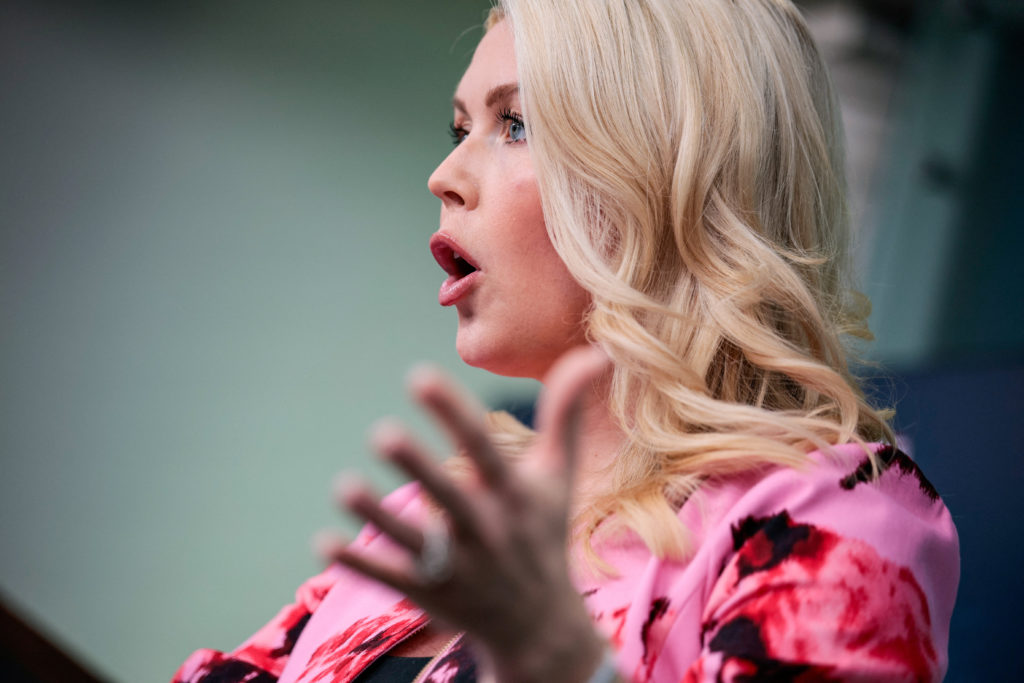
White House press secretary Karoline Leavitt responded Monday to Pope Leo’s remarks against waging war, saying U.S. leaders and troops have long turned to prayer during the country’s most difficult moments. Her comments came during a news briefing after the pontiff spoke out against war.
What Happened
Leavitt was asked about Pope Leo’s comments at a White House briefing and said U.S. leaders have relied on prayer “during the most turbulent times in our nation’s history.” According to the source, her remarks were made in direct response to the pope’s statement criticizing the use of war.
The PBS report does not include the full text of the pope’s comments, nor does it provide additional policy detail from the White House briefing. The exchange appears to have centered on the moral and public framing of conflict rather than on any announced change in U.S. policy.
Background
Public remarks from the pope on war and peace often carry global weight because the Vatican is one of the few international voices that speaks primarily from a moral and humanitarian perspective. When a pope speaks against war, the message can resonate across political lines, especially during periods of international tension.
U.S. administrations frequently respond to papal statements on conflict, migration, and humanitarian crises because the Catholic Church has deep influence in the United States, Latin America, and much of the world. In Latin America, where Catholicism remains a major religious force, comments from the Vatican are often followed closely by governments, churches, and the public.
Why It Matters
The exchange matters because it reflects how world leaders frame war not only as a strategic issue, but also as a moral one. Even brief remarks from the White House can signal how the U.S. wants to present itself in a broader debate over conflict, peace, and national identity.
For Panama and the wider region, the significance is mostly diplomatic and cultural. Papal statements often reverberate strongly in Latin America, where public opinion on war, migration, and peace efforts can shape political debate. While the briefing does not point to any direct policy effect for Panama, the conversation underscores how global religious and political voices continue to influence public discussion across the hemisphere.
In this case, the White House’s response suggests an emphasis on tradition, patriotism, and faith rather than confrontation. That framing may matter in Washington’s broader messaging at a time when international conflicts remain a major concern for governments and religious leaders alike.