
What Happened
Panama’s National Railway Secretariat says the first-phase results of the Panama–David train project feasibility study are due by March 31, a milestone that could determine whether the ambitious rail plan moves forward. The project has drawn attention for its potential scale: officials have said costs could reach up to $4 billion and envisioned speeds of 180 km/h for passenger services and 100 km/h for freight.
Project Details
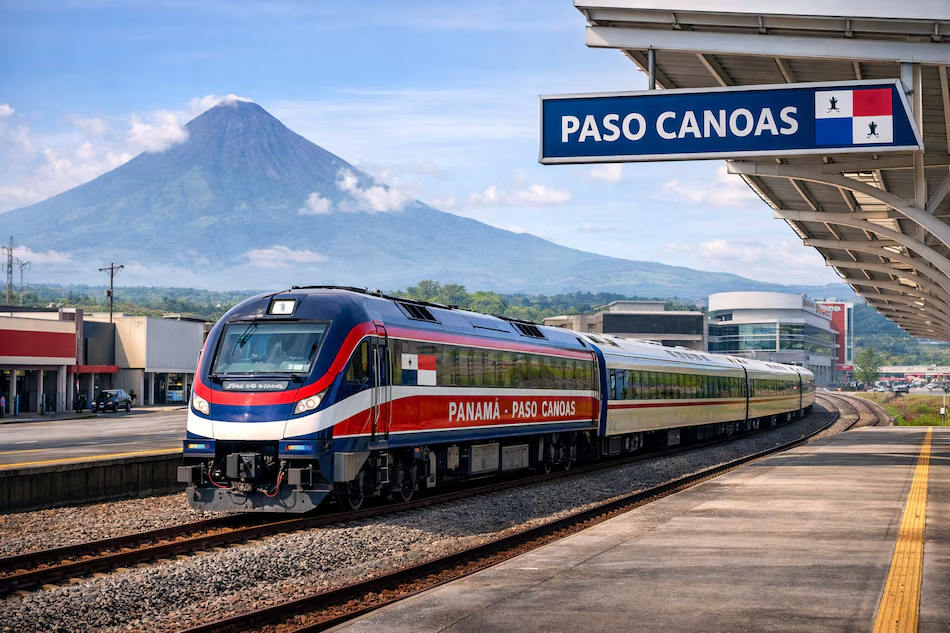
Authorities describe a preliminary route of 475 kilometres from Panama City to Paso Canoas at the Costa Rica border, with 14 stations planned. The initial construction phase will focus on the Panama Pacific–Divisa section. Project documents and officials also reference a conceptual design for a railway bridge over the Panama Canal.
Regional Agreement and Signatories
Panama and Costa Rica have taken a formal step toward regional rail integration by signing a memorandum of understanding to develop a Central American Railway Logistics Corridor. The agreement was signed by the National Railway Secretariat of Panama and the Costa Rican Railway Institute in a ceremony led by Foreign Minister Javier Martínez Acha. Foreign Minister Martínez Acha said, “We are charting a new future and a commitment to the progress and integration of the region.”
Studies Underway
Key studies already underway include a technical feasibility study being carried out by AECOM USA Inc., an environmental impact assessment, a socioeconomic census, and the conceptual design for a rail crossing over the Panama Canal. The secretary of the National Railway Secretariat, Henry Faarup, has outlined these workstreams as part of the initial phase.
Economic and Logistical Impacts
Planners envision the rail corridor as more than a transportation link. The project proposal includes integrating optical fiber, electrical transmission lines, dry ports, free trade zones and port interconnection. Each station is planned as a development hub meant to promote employment, trade and tourism. Panama’s collaboration with Costa Rica — and potential expansion to other countries such as Nicaragua — frames the initiative as a regional logistics effort.
What This Means
If the first-phase feasibility results due at the end of March are positive, the project could proceed to further design and coordination with Costa Rica under the memorandum’s framework for technical and institutional cooperation. Officials have highlighted the potential for the corridor to boost logistics and tourism and to align operating standards and engineering studies across the participating countries.