
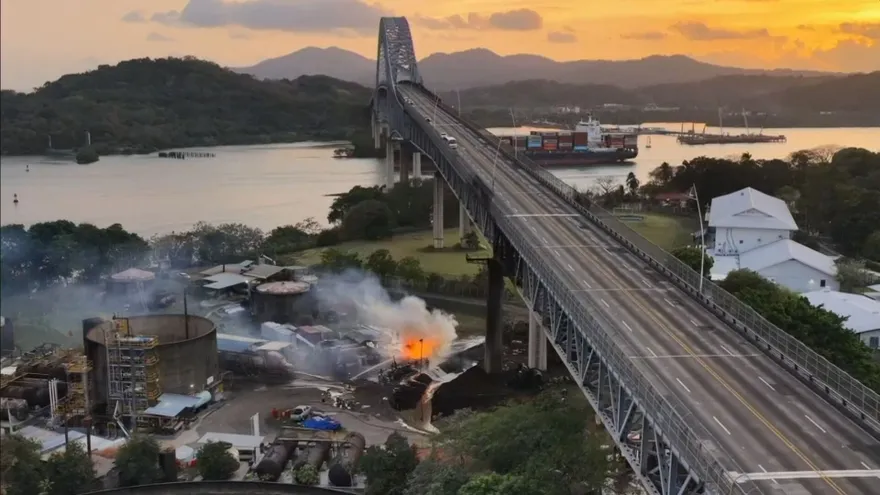
What Happened
Panamanian authorities have begun a technical review of the Americas Bridge after the fire that broke out earlier this week, while also evaluating whether to remove fuel tanks and redefine the future use of valuable land along the Panama Canal.
The measures point to a broader reassessment of infrastructure and strategic waterfront areas in one of the country’s most important transport and economic corridors. The Canal zone remains a critical space for national logistics, public safety, and long-term land planning.
Why the Review Matters
The Americas Bridge is one of the key crossings near Panama City and the Canal area, making any technical inspection especially significant for traffic flow and structural safety. A fire in that zone raises immediate concerns about nearby assets, emergency response readiness, and the resilience of surrounding infrastructure.
At the same time, reviewing the presence of fuel tanks near valuable Canal-side land could reshape how authorities think about safety, urban development, and economic potential. Land bordering the Canal is among the most strategic in the country, and decisions about its use often carry implications for investment, transport, and public planning.
Background on the Canal Corridor
The Panama Canal is more than a shipping route; it is also a major driver of national planning decisions. Areas close to the waterway often attract attention because of their economic value and their importance to operations that support trade, movement, and infrastructure.
Any proposal to remove fuel tanks or repurpose land in this corridor would likely reflect a balance between industrial needs and a broader vision for safer, more productive use of prime territory. Such discussions are especially relevant in a country where the Canal remains central to both the economy and public policy.
What This Means
The combined review of the bridge and the Canal-side land suggests that authorities are considering both immediate safety concerns and longer-term development questions. The outcome could influence how key transport assets are protected and how strategic land is managed in the future.
For Panama, these decisions go beyond one incident. They touch on the future of critical infrastructure, the organization of urban space, and the stewardship of land tied to the country’s most important national asset.