
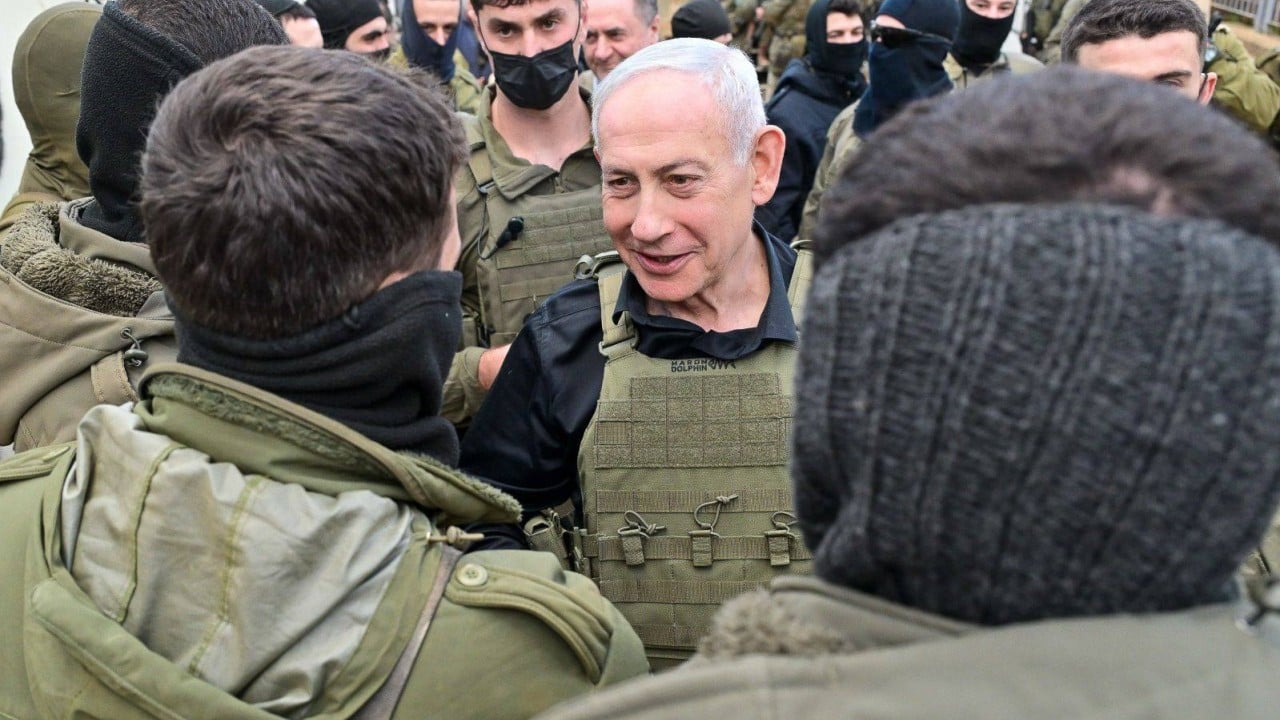
Israeli Prime Minister Benjamin Netanyahu has told troops in southern Lebanon that the fight there is “far from over,” underscoring the fragility of efforts to halt the Israel-Hezbollah conflict even as Beirut’s leaders push for an end to the war. The remarks came as Lebanese Prime Minister Nawaf Salam said he was working to stop the fighting, and as the Lebanese Red Cross reported that one of its paramedics was killed in the south.
What Happened
Netanyahu made his comments during a visit to southern Lebanon, where Israeli forces remain engaged in a conflict that has repeatedly spilled across the border. His message to troops was blunt: the war continues, and Israel’s military campaign is not yet finished.
At the same time, Salam said he was trying to stop the Israel-Hezbollah war, signaling Lebanon’s political leadership was pressing for de-escalation. The contrast between the two statements highlighted how far apart the sides remain, even as the fighting continues to take a toll on civilians and aid workers.
The Lebanese Red Cross said one of its paramedics was killed in the south. The organization said its teams were directly targeted by an Israeli drone while carrying out a humanitarian mission, despite the ambulances and crews being marked with Red Cross insignia. Such attacks, if confirmed, would raise serious concerns about the protection of medical personnel under international humanitarian law.
Background
The Israel-Hezbollah conflict has been one of the most volatile spillovers from the Gaza war, with hostilities along the Israel-Lebanon frontier intensifying over the past year. Hezbollah, the powerful Iran-backed Lebanese armed group and political party, has long maintained a major military presence in southern Lebanon, while Israel has said it is acting to prevent attacks on its northern border and to degrade Hezbollah’s capabilities.
Cross-border exchanges have displaced residents on both sides of the frontier and deepened fears that the confrontation could broaden into a wider regional war. Lebanon, already struggling with a severe economic collapse and weak state institutions, has been under heavy pressure to contain the crisis and avoid a conflict that could further damage the country’s fragile infrastructure and civilian population.
Southern Lebanon has historically been a flashpoint in the long conflict between Israel and Hezbollah. The area has seen repeated rounds of violence over the decades, and hospitals, ambulances and other emergency services have frequently been caught in the middle of hostilities. Any death of a first responder in the conflict adds to the pressure on international actors calling for restraint and humanitarian access.
Why It Matters
Netanyahu’s message suggests there is no immediate sign of a political breakthrough, even as Lebanon’s prime minister seeks to end the fighting. That makes the border conflict more than a local clash: it remains a major Middle East security risk with the potential to draw in regional powers and disrupt shipping, energy markets and diplomatic efforts across the area.
For Panama and Latin America, the conflict matters mainly through its wider economic and geopolitical effects. Escalation in the eastern Mediterranean can add pressure to global energy prices, raise insurance and transport costs, and complicate international diplomacy at a moment when governments are already dealing with multiple security crises. Any widening of the war could also deepen strains on global trade routes, which would be felt far beyond the Middle East.
The death of a Red Cross paramedic also puts renewed attention on civilian protection in war zones. In conflicts where medical personnel are endangered, the humanitarian consequences spread quickly: emergency response weakens, civilian casualties rise, and the prospects for negotiated de-escalation become even harder to achieve.