
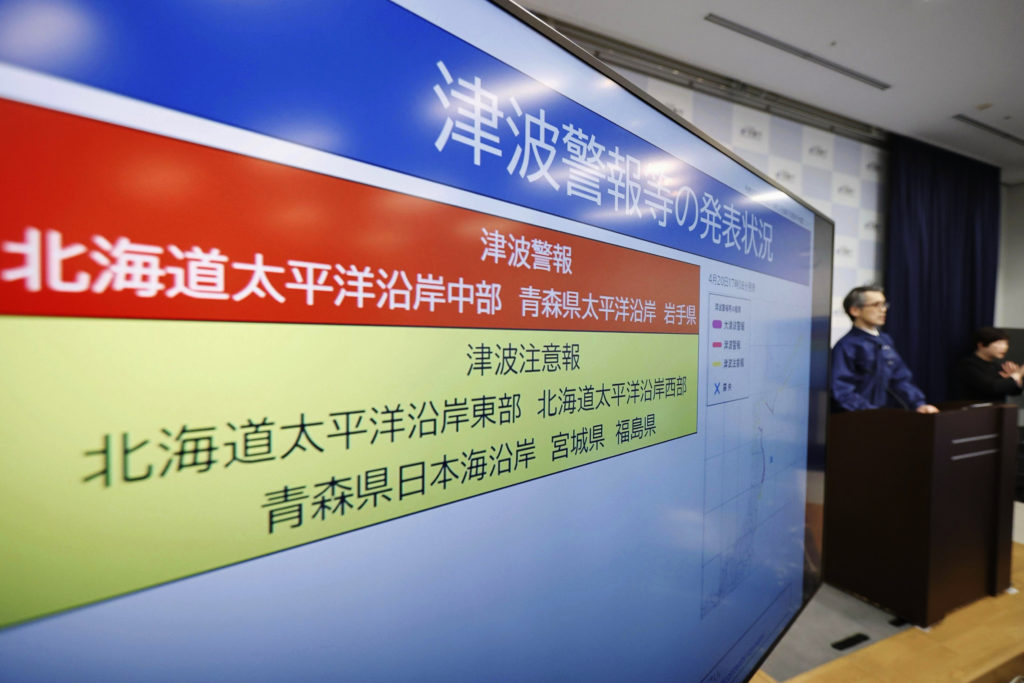
A powerful offshore earthquake off northern Japan prompted a brief tsunami alert on Monday and led authorities to warn that the chance of a larger quake may be slightly elevated along nearby coastal areas. The tremor, measured at a preliminary magnitude of 7.7, put renewed attention on one of the world’s most seismically active regions.
What Happened
The earthquake struck off northern Japan and was strong enough to trigger a short-lived tsunami alert. In the aftermath, officials issued an advisory indicating that the risk of a possible mega-quake in the coastal zone had increased slightly.
Japan sits on the Pacific Ring of Fire, where several major tectonic plates meet and earthquakes are frequent. Large offshore quakes in the region can generate tsunami waves and, in some cases, raise concern that a larger event may follow.
The magnitude 7.7 tremor was the central event, but the advisory that followed is what makes the situation noteworthy. Japan’s monitoring and warning systems are among the most advanced in the world, and alerts are often issued quickly after strong seismic activity to reduce the risk to communities along the coast.
Background
Japan has long lived with the threat of major earthquakes and tsunamis. The country’s modern disaster-preparedness system was heavily shaped by the devastating 2011 earthquake and tsunami, which caused widespread destruction and a nuclear crisis at Fukushima. Since then, authorities have maintained robust early-warning, evacuation, and coastal monitoring systems.
Warnings about a potential mega-quake are especially serious in Japan because the country straddles several active fault systems and subduction zones, where one tectonic plate dives beneath another. These settings are capable of producing very large earthquakes, sometimes followed by dangerous sea surges that can reach coastal communities within minutes.
For Japan and other Pacific nations, even a brief tsunami alert can disrupt transport, port operations, fishing activity, and coastal infrastructure. The region’s dense network of trade routes and shipping lanes also makes seismic events a concern far beyond the immediate area of shaking.
Why It Matters
This quake is a reminder of how quickly a major seismic event in Japan can become an international concern. Japan is a global economic power and a key node in Pacific trade, so disruptions to ports, supply chains, or transport corridors can have wider effects across Asia and beyond.
For Panama and Latin America, the connection is indirect but real. Japan’s role in global shipping and manufacturing means any major coastal disaster can ripple through international freight markets and supply chains that also touch Latin American exporters and importers. In addition, major earthquakes in the Pacific are closely watched across the region because tsunami systems and emergency coordination are shared among Pacific-facing countries.
Even when damage is limited, large Japanese earthquakes can influence insurance markets, shipping schedules, and investor sentiment. Monday’s event is a reminder that one of the world’s most prepared countries for natural disasters still faces significant risk from the next major offshore quake.