
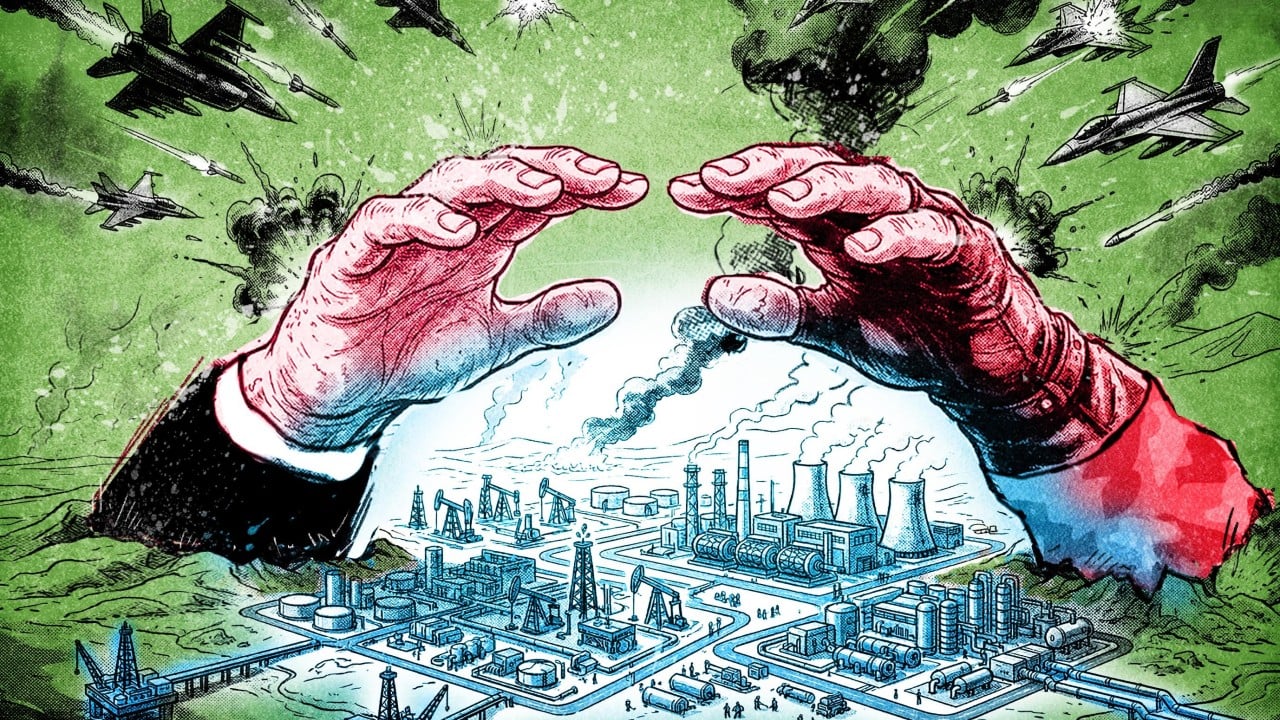
The war between the United States, Israel and Iran is already reverberating far beyond the battlefield, raising questions about whether Washington is moving away from its long-standing preference for tightly targeted precision strikes and toward a more expansive form of coercion. The first hits on Iran’s South Pars gas field signaled that energy infrastructure and broader strategic assets could be pulled into a conflict that is reshaping regional security, global markets and the credibility of American military power.
What Happened
One of the opening salvos in the conflict struck South Pars, Iran’s giant gas field and one of the most important energy sites in the world. The attack marked a significant escalation because it reached beyond military targets and into infrastructure tied to Iran’s economic lifeline. Tehran responded with its own attacks, deepening fears that the fighting could widen and become harder to contain.
The conflict highlights a shift in the way military force is being used. For decades, U.S. administrations have often emphasized precision strikes on limited targets in order to punish adversaries while reducing civilian harm and avoiding broader escalation. In this war, however, the targeting of strategic infrastructure suggests a more disruptive approach, one that seeks to pressure Iran not only militarily but economically and psychologically as well.
That shift matters because it changes expectations about how future wars may be fought. Rather than focusing only on narrow military assets, states may increasingly look to strike energy systems, logistics networks and other high-value infrastructure that can quickly affect an opponent’s ability to function. In the case of Iran, South Pars is especially sensitive because it sits at the center of the country’s natural gas output and broader energy security.
Background
South Pars is part of the world’s largest gas reserve, shared by Iran and Qatar, and is central to Iran’s domestic energy supply and export ambitions. Any attack on the field is therefore not just a military act but also an economic blow, with potential consequences for power generation, industry and state revenues. Damage to energy assets in the Gulf can also affect global markets because the region remains a critical source of oil and gas.
The United States has long relied on precision strikes as a way to demonstrate military superiority while limiting the scale of conflict. That approach was meant to send a message without triggering a major regional war. But Iran’s ability to retaliate, combined with the vulnerability of energy infrastructure across the Middle East, has made it harder to keep such conflicts neatly contained.
The war also arrives at a moment when global energy security is already fragile. Any sustained disruption in the Gulf can add pressure to fuel prices, shipping routes and supply chains far beyond the region. For countries in Latin America, including Panama, turmoil in energy markets can feed through to transportation costs, inflation and trade conditions, even if indirectly.
Why It Matters
The larger significance of the conflict lies in how it may redefine modern deterrence. If major powers increasingly treat strategic infrastructure as a legitimate target, wars could become more economically destructive and more difficult to end. That would raise the stakes for every country dependent on stable energy flows, maritime trade and predictable rules of engagement.
For Panama, the concern is not direct military involvement but exposure to the consequences of global instability. The Canal depends on uninterrupted commercial traffic, and any shock to fuel prices, insurance costs or shipping confidence can ripple through a trade-dependent economy. A prolonged conflict involving Iran would also deepen uncertainty across the wider Latin American region, where governments are sensitive to inflation and energy volatility.
Beyond the immediate battlefield, the war is testing how the world views U.S. military capability and strategic judgment. A campaign that moves beyond limited precision strikes could signal a more forceful but also more dangerous era in international conflict, with consequences that outlast the fighting itself.