
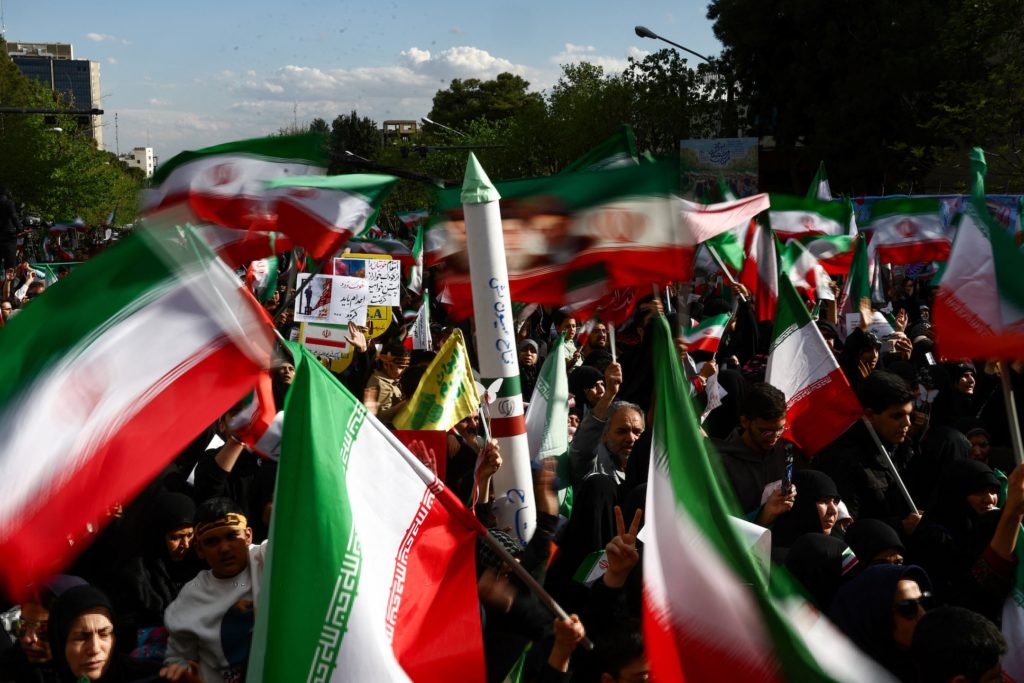
As a fragile U.S.-Iran ceasefire hangs in the balance, the war’s political and human fallout is being felt most sharply inside Iran, where residents are confronting the consequences of days of attacks and the uncertainty of what comes next. The tensions have also raised alarms across the region, especially around the Strait of Hormuz, one of the world’s most important energy chokepoints.
What Happened
Recent fighting and strikes have put Iran at the center of a widening regional crisis, with the ceasefire offering only a temporary pause in hostilities. The confrontation has unfolded alongside continued Israeli strikes in Lebanon, adding to fears that the conflict could spread further across the Middle East.
To better understand how Iranians themselves are responding, journalist Geoff Bennett spoke with Holly Dagres, who spent her teenage years in Tehran and now curates The Iranist, a publication focused on Iran. Her perspective highlights the gap between international diplomatic maneuvering and the daily reality for people living inside the country.
For many Iranians, the most immediate concern is not just the military confrontation, but what it could mean for personal safety, economic stability, and the future of the country’s already strained relationship with the United States and Israel. The sense of uncertainty is amplified by the strategic importance of the Strait of Hormuz, through which a large share of global oil shipments pass.
Background
Iran has long been a flashpoint in Middle East politics because of its nuclear program, its regional alliances, and its rivalry with both the United States and Israel. Any direct military exchange involving Iran risks drawing in neighboring countries and disrupting global energy markets.
The Strait of Hormuz sits at the center of that risk. Located between Iran and the Arabian Peninsula, it is a narrow maritime corridor through which oil and gas exports from Gulf states flow to global markets. Even the threat of disruption there can send shockwaves through energy prices and international shipping routes.
Lebanon has also remained part of the broader regional picture, with Israeli strikes there keeping pressure high on Iran-backed groups such as Hezbollah. That has made the wider conflict feel interconnected, rather than confined to a single front.
Inside Iran, public reactions to conflict with foreign powers are often shaped by a combination of nationalism, fear of escalation, and frustration with the government in Tehran. Economic sanctions, political repression, and periodic unrest have already created deep strain across Iranian society, making any new military crisis especially destabilizing.
Why It Matters
The immediate danger is that the ceasefire may not hold, which would leave the region vulnerable to renewed escalation. Even without a full breakdown, the stand-off is already affecting geopolitical calculations from Washington to Gulf capitals and beyond.
For Panama and Latin America, the most direct impact would likely come through energy and shipping markets. Any prolonged threat to the Strait of Hormuz can push up oil prices, affecting fuel costs, inflation, and trade conditions in countries that import energy or rely on global transport networks.
More broadly, the crisis underscores how conflicts in the Middle East can quickly ripple into Latin American economies through higher shipping costs and commodity prices. For that reason, the situation in Iran is not just a distant geopolitical issue; it is one that can be felt in households and businesses far beyond the region.