
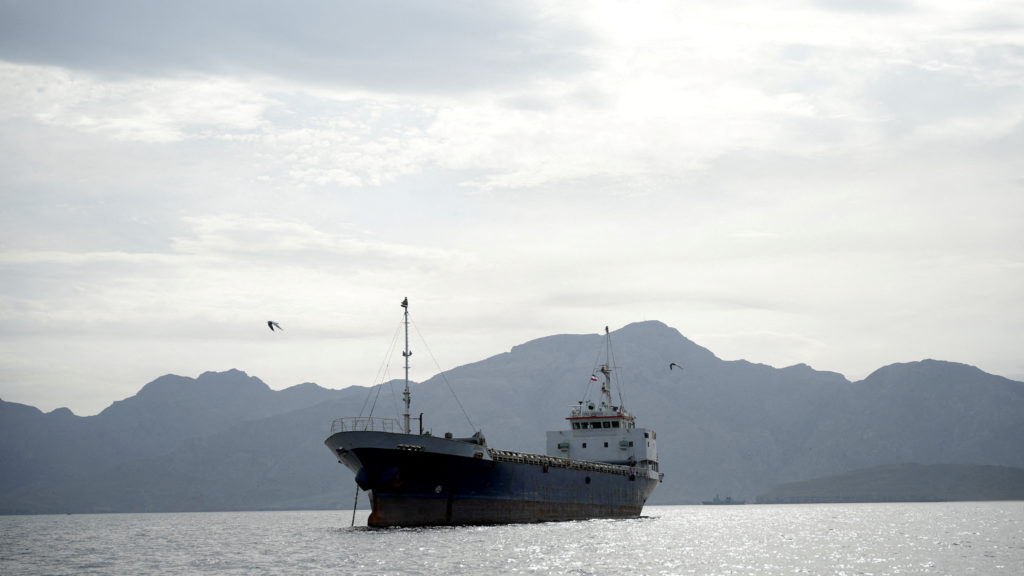
The United States appeared to be moving toward a naval blockade of Iranian ports as tensions with Tehran escalated sharply, raising the risk of a wider confrontation in the Middle East and further disruption to global shipping routes.
What Happened
President Donald Trump said in a social media post that Iran’s navy was “laying at the bottom of the sea, completely obliterated,” while warning that Tehran still had “fast attack ships.” He added that any such vessels approaching the U.S. blockade would be “immediately ELIMINATED.”
The message came shortly after the blockade was due to begin, underscoring the speed with which the standoff has intensified. The remarks also suggested a heightened U.S. willingness to use force at sea if Iranian naval assets challenge the operation.
Iran, meanwhile, has threatened ports across the Middle East, signaling that it may seek to retaliate beyond its own coastline if pressure from Washington continues. That raises concerns not only for the Persian Gulf, but also for broader maritime traffic linked to energy supplies and international trade.
Background
Maritime confrontation between the United States and Iran has long been one of the most dangerous flashpoints in the Middle East. Iran has repeatedly relied on fast attack craft, mines, drones, and missile systems to pressure rival navies and commercial shipping, particularly in and around the Strait of Hormuz, a narrow waterway through which a large share of the world’s oil exports pass.
Any blockade of Iranian ports would represent a major escalation, with potential consequences for crude oil prices, insurance costs, and shipping schedules worldwide. The Gulf region is also closely watched by governments in Latin America, including Panama, because disruptions to international trade routes often ripple through ports, maritime insurance markets, and fuel prices far beyond the conflict zone.
For the United States, naval operations around Iran have historically been framed as deterrence measures meant to protect shipping and prevent attacks on allied vessels. For Iran, threats to regional ports are typically used as leverage to signal that pressure on Tehran could have costs for its neighbors and for global commerce.
Why It Matters
This is a high-risk moment for international security because even a limited clash at sea can quickly broaden into a regional crisis. A blockade, if enforced, could affect energy markets almost immediately and place civilian shipping in the crossfire.
The stakes extend well beyond the Middle East. Panama depends heavily on the smooth functioning of global maritime trade through the Canal and connecting shipping networks. Any sustained shock to energy transport or freight routes can raise costs for carriers, importers, and consumers across Latin America.
With both sides now threatening escalation, the situation is moving into a phase where miscalculation could have global consequences. In an interconnected shipping system, conflict in the Gulf is rarely confined to the Gulf.