
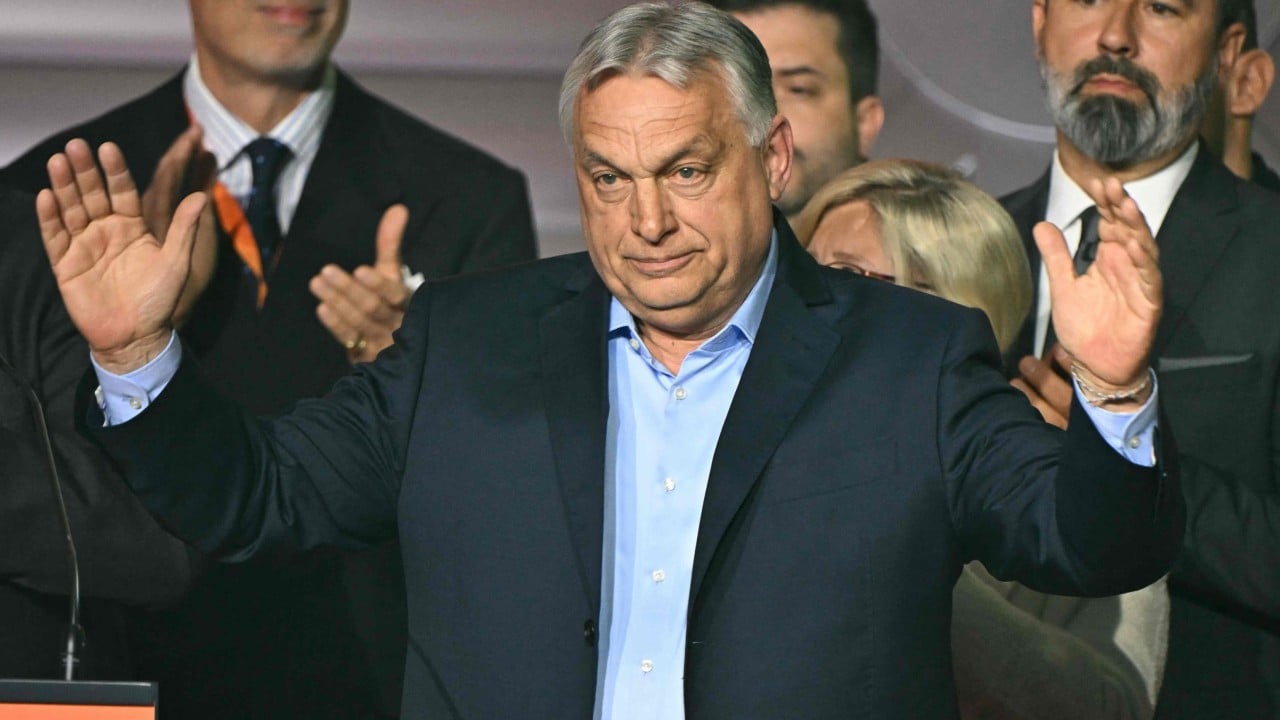
Hungary’s long-dominant prime minister, Viktor Orban, has conceded defeat after voters delivered a sweeping rebuke to his 16-year rule, in a result that could reshape the country’s political direction and its ties with Europe and the wider West.
What Happened
Orban confirmed the result in a phone call with Peter Magyar, the leader of the opposition Tisza Party, after Sunday’s election in Budapest. From his election headquarters, Orban described the outcome as “painful but clear” and congratulated the winning party.
The result marks the end of a political era for a leader who has dominated Hungary’s politics for more than a decade and a half. It also represents a sharp voter rebuke to a government widely associated with authoritarian tendencies, corruption allegations, and an increasingly confrontational relationship with the European Union.
Orban’s administration had also become known for maintaining close ties with Beijing, Moscow and, at times, Donald Trump’s Washington, often while clashing with Brussels over rule-of-law concerns, migration policy and the use of EU funds.
Background
Orban first rose to power as Hungary’s central political figure in the 1990s and returned as prime minister in 2010, building one of Europe’s most entrenched political machines. Over time, his government gained a reputation for consolidating media influence, tightening control over institutions and using nationalist rhetoric to cement support among voters who saw him as a defender of sovereignty.
Hungary has also become one of the most closely watched countries in the European Union because Orban frequently positioned himself as a challenger to the bloc’s mainstream direction. His government resisted pressure from EU institutions on democratic standards and repeatedly sought a more independent foreign policy, including warmer relations with Russia and China.
That stance made Hungary an outlier inside the EU, especially after Russia’s invasion of Ukraine intensified tensions across Europe. The vote against Orban therefore carries significance well beyond domestic politics, because it may signal whether Hungarian voters still support the country’s eastward tilt or want a course correction toward Europe’s political mainstream.
Peter Magyar and the Tisza Party emerged as the main force challenging that order, channeling public frustration over corruption, inflation pressures and democratic backsliding. The scale of the result suggests the opposition succeeded in turning discontent into a national mandate for change.
Why It Matters
The outcome matters because Hungary sits at the intersection of European security, energy policy and democratic governance. A change in leadership could alter Budapest’s stance on key EU decisions, including support for Ukraine, sanctions on Russia and disputes over the rule of law. It also raises the possibility of a reset in Hungary’s relationship with Western partners after years of friction.
For Latin American readers, the significance is more indirect but still important: Hungary’s vote is part of a broader global pattern in which voters in established democracies are pushing back against strongman politics, corruption and institutional erosion. Those trends have implications for international alliances, trade diplomacy and the political atmosphere surrounding multilateral institutions that include countries from Latin America and the Caribbean.
The result also underscores how quickly political fortunes can shift when economic strain and public distrust converge. In that sense, the Hungarian election is not just a domestic upset but a signal that even deeply entrenched leaders can be vulnerable when voters decide the balance between stability and accountability has been broken.