
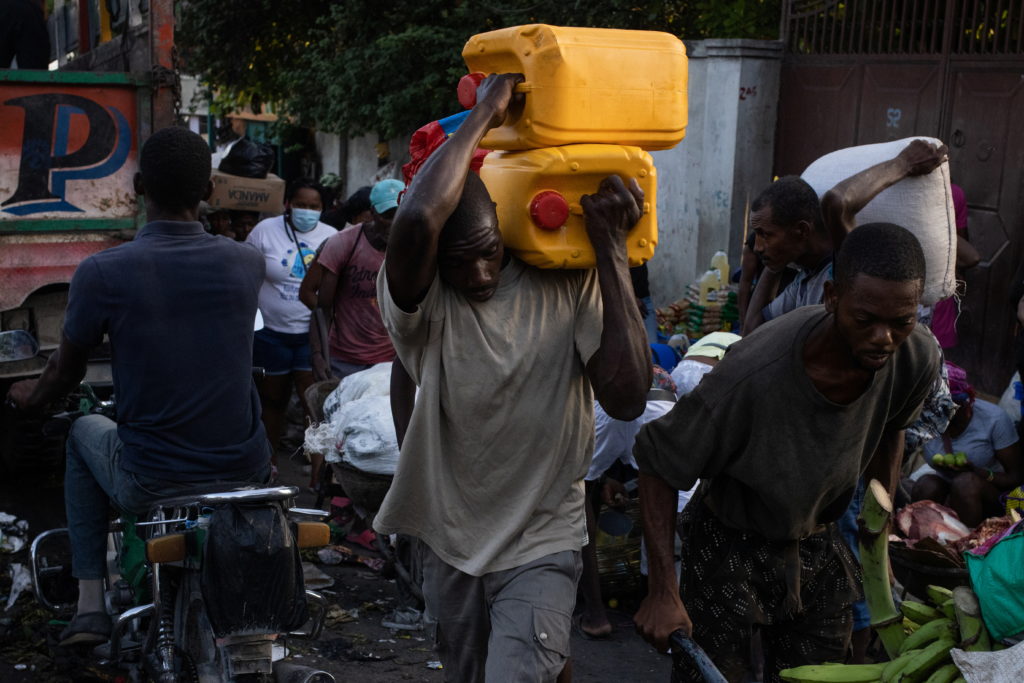
More than 1,000 workers took to the streets of Haiti’s capital to demand a higher minimum wage as fuel prices climb amid the deepening conflict in Iran. The protest reflects mounting pressure on Haitian households already struggling with soaring living costs, weak public services and a fragile economy.
What Happened
Workers gathered in Port-au-Prince to press for salary increases, arguing that the current minimum wage no longer covers basic needs as the cost of transport, food and other essentials rises. The demonstration came as global oil prices have been pushed upward by heightened tensions linked to the conflict in Iran, a development that quickly affects import-dependent countries such as Haiti.
Haiti relies heavily on imported fuel for transportation, electricity generation and the movement of goods. When oil prices rise, the impact is felt almost immediately in local markets, where higher transport costs can ripple through the prices of food and other daily necessities. For workers whose pay has not kept pace with inflation, the pressure can become acute.
Background
Haiti has faced years of political instability, gang violence and economic hardship, all of which have weakened the country’s ability to absorb external shocks. In that environment, global energy price spikes can have outsized consequences. Fuel shortages and price increases have repeatedly fueled public frustration in Haiti, where protests over wages, living conditions and access to basic services are common.
Minimum wage disputes are especially sensitive in countries where a large share of workers are paid in the informal sector or earn incomes that are quickly eroded by inflation. In Haiti, labor groups have long argued that wage adjustments lag behind the true cost of living, particularly when transport and food prices surge. The latest protest follows that same pattern, with workers seeking relief before higher oil costs deepen the strain on household budgets.
The conflict in Iran has added another layer of uncertainty to global energy markets. Even when a crisis unfolds far from the Caribbean, oil traders react quickly to any threat that could disrupt supply lines or shipping routes. For economies that import most of their energy, those market moves can translate into higher prices at the pump, costlier imports and broader inflation.
Why It Matters
The protest is a reminder that geopolitical tensions in the Middle East can have immediate economic consequences in the Americas, especially for poorer countries that depend on imported fuel. In Haiti, where many families already live close to the margin, higher oil prices can accelerate inflation and intensify social unrest.
The demonstration also matters for the wider Caribbean and Latin America, where several nations remain exposed to swings in global energy markets. Governments across the region often face the same dilemma: how to cushion consumers from rising fuel costs without worsening budget pressures or undermining other public spending priorities.
For Panama, the episode is a useful indicator of how global oil shocks can feed regional instability. Panama is more insulated than Haiti because of its logistics sector and stronger access to international markets, but it is not immune to fuel price volatility. When energy costs rise sharply, transport, trade and consumer prices can be affected across Central America, adding pressure to households and businesses alike.
In Haiti, the demand for higher wages is likely to remain a central issue as long as inflation continues to erode purchasing power. The protest underscores a broader truth shared by many economies in the region: when global energy markets tighten, workers are often the first to feel the pain.