
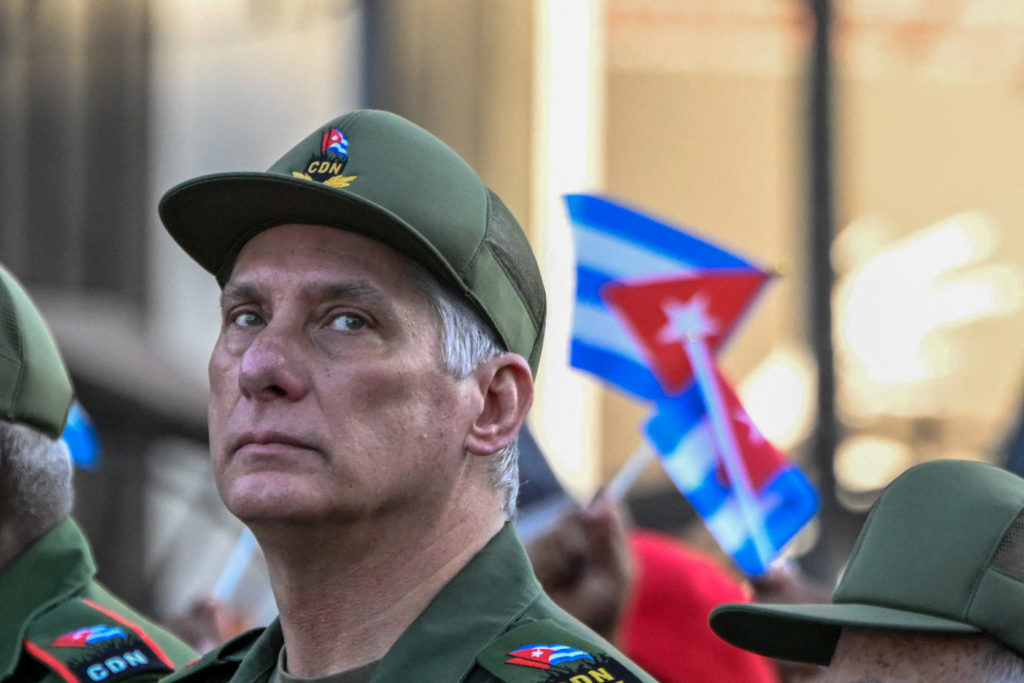
Cuba’s president said the island does not want confrontation with the United States but is prepared to defend itself if necessary, after comments from President Donald Trump suggested his administration could turn its attention to Cuba once the war in Iran ends.
What Happened
The Cuban president framed his message as a warning and a pledge: Havana does not seek aggression from Washington, but it will be ready to fight if the situation demands it. The remarks come amid heightened tension over the possibility that the Trump administration may broaden its foreign policy focus from the Middle East to Cuba.
Trump this week said his administration could focus on Cuba after the war in Iran ends, placing the Caribbean nation back into the spotlight at a time of renewed uncertainty in U.S.-Latin America relations. The statement was interpreted in Havana as a signal that Cuba could face increased pressure from Washington in the near future.
Background
Relations between the United States and Cuba have long been shaped by sanctions, diplomacy, migration disputes, and periodic confrontations over the island’s political system. Since the 1959 Cuban Revolution, successive U.S. administrations have used a range of policies aimed at isolating the communist-led government, while Cuban leaders have repeatedly denounced what they describe as foreign interference and economic coercion.
Cuba remains strategically important in the Caribbean, not only because of its proximity to the United States but also because regional tensions involving Havana often reverberate across Latin America. Shifts in U.S. policy toward Cuba can affect migration patterns, diplomatic alignments, and the broader atmosphere in hemispheric relations. For countries in Central America and the Caribbean, any escalation between Washington and Havana can quickly become part of a wider regional debate.
Trump’s remarks also come at a moment when Washington is already engaged in a major foreign policy crisis involving Iran. A broader shift in U.S. attention toward Cuba could signal new sanctions, harsher rhetoric, or renewed pressure on the Cuban government, though the immediate shape of that policy remains uncertain.
Why It Matters
This is a significant development for the Western Hemisphere because even limited changes in U.S.-Cuba policy can have outsized effects across the region. Cuba is a persistent symbol of Cold War-era tensions in the Americas, and any move toward confrontation could influence diplomatic relations, migration trends, and security calculations throughout the Caribbean basin.
For Panama and Latin America more broadly, the issue matters because instability in Cuba can add strain to already sensitive regional politics. The island’s economic difficulties have helped drive migration and humanitarian concerns, while sharper U.S. pressure on Havana could intensify debate among Latin American governments about sovereignty, sanctions, and Washington’s role in the region. With U.S.-Latin America relations already under close scrutiny, Cuba is once again emerging as a flashpoint with potential ripple effects well beyond the island itself.