
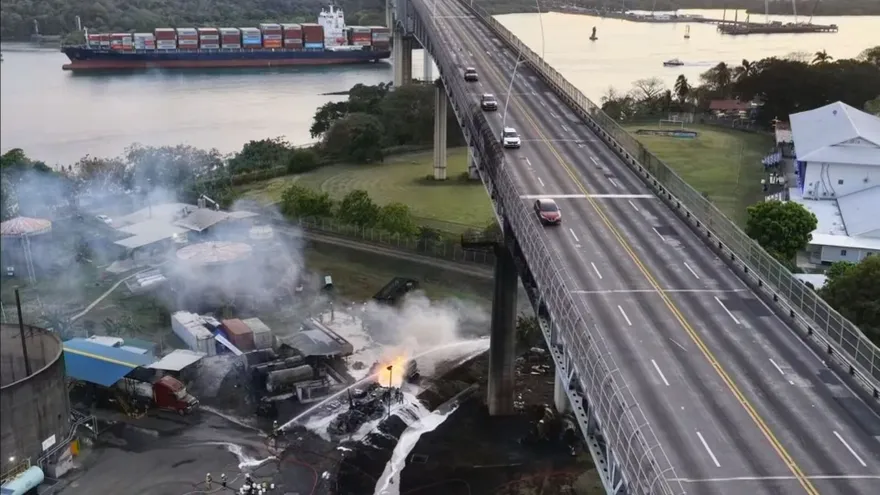
What Happened
Panama should strengthen its emergency response planning for critical infrastructure failures, according to APEDE, after recent incidents involving the Puente de las Américas exposed weaknesses in coordination between public institutions and private companies.
The business association said the key problem is the lack of clear rules defining how state entities and private operators should act together when essential systems are disrupted. In a crisis, that gap can slow decisions at the exact moment when speed matters most.
Why Coordination Matters
Major roads, bridges and other strategic assets support daily travel and economic activity across Panama. When one of those points fails, the effects can quickly spread to traffic, commerce and public safety. Clear procedures help determine who takes the lead, who communicates with the public and how responsibilities are shared among the institutions involved.
Without an established framework, emergency responses can become fragmented. That can complicate traffic management, delay repairs and increase uncertainty for drivers, businesses and other users who depend on reliable infrastructure.
The Puente de las Américas in Focus
The Puente de las Américas is one of Panama’s best-known transport links and remains an important part of the country’s road network. Any disruption involving the bridge naturally raises questions about maintenance, resilience and the readiness of authorities to handle an incident without confusion.
APEDE’s warning extends beyond one structure. It points to the wider need for Panama to have a reliable crisis framework for assets that are central to mobility and economic performance. The association’s message is that infrastructure policy must include not only construction and upkeep, but also the ability to respond immediately when something goes wrong.
What This Means for Panama
Stronger coordination protocols could improve response times and reduce the impact of future disruptions. For a country that depends heavily on efficient movement across key transport corridors, clearer rules for public and private cooperation would help limit uncertainty during emergencies.
APEDE, the Panamanian Association of Business Executives, is a prominent non-profit group that has long participated in Panama’s public policy debate. Through forums and policy discussion, it regularly advocates for competitiveness, economic growth and high-quality employment. Its latest warning adds pressure for more serious crisis management planning across the country’s infrastructure system.