
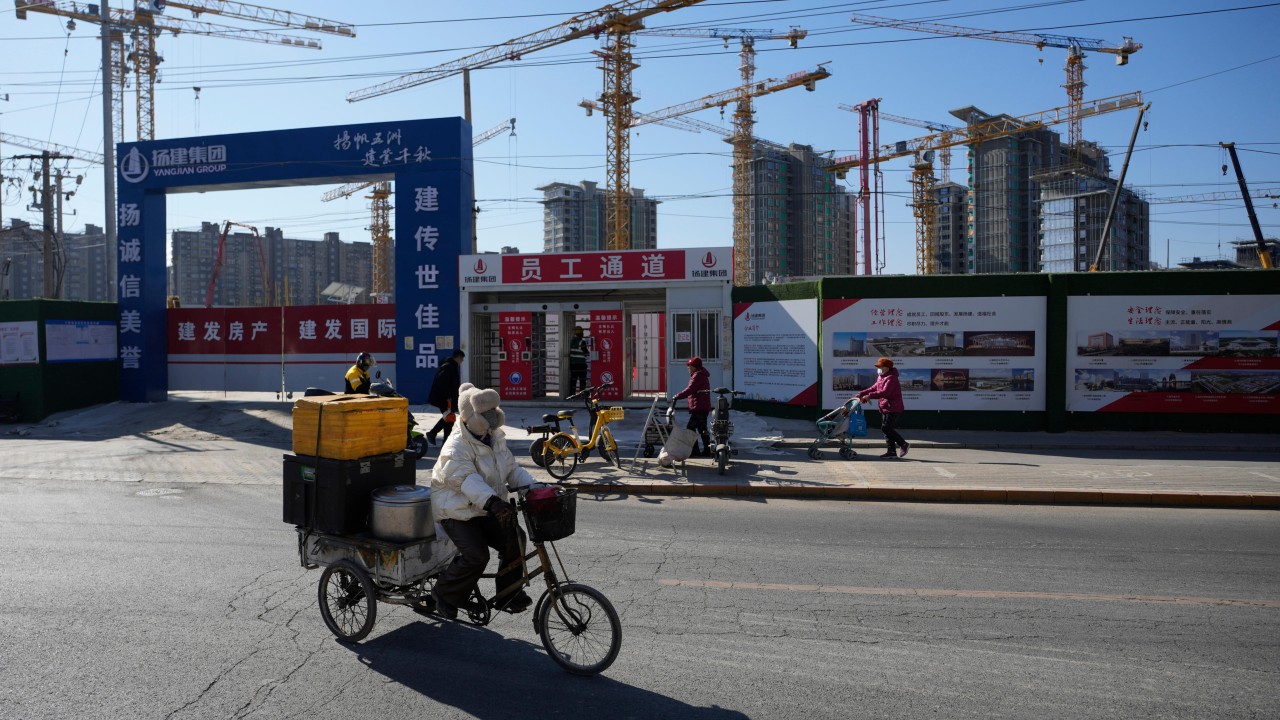
China’s annual policy blueprint has sent a clear message to investors: Beijing is no longer treating the property sector as a growth engine, but instead as a potential source of risk that must be contained. In its latest government work report, property-related measures have been placed under the framework of risk prevention, underscoring a more defensive stance.
What Happened
At the National People’s Congress, the most notable signal, according to the South China Morning Post, was not a headline-grabbing push for stimulus. Rather, it was a “quiet re-categorisation” in how property policy is discussed within the work report.
The report again places property policy in the section focused on preventing and managing risks, signaling that Beijing has reappraised housing’s role in the broader economy. The same analysis points to the absence of a “stimulus bazooka” aimed directly at reigniting the housing market.
Background
China’s property sector has long been central to economic expectations—helping drive construction activity, investment spending, and household wealth perceptions. Over time, however, structural weaknesses and stress within parts of the sector have raised concerns about financial stability and the potential spillover effects of troubled developers and liquidity strains.
Within China’s policy process, where an issue is placed in the government work report can reflect the priorities of the leadership. The source highlights that this internal classification matters as much as the policy words themselves, because it indicates how Beijing wants ministries and regulators to treat the sector: less as an engine to accelerate growth and more as an area that must be stabilized and shielded from further deterioration.
By relegating housing-related policy to the risk prevention track, Beijing is effectively telling markets that its priority is managing downside outcomes rather than using property as the primary lever for near-term momentum.
Why It Matters
The shift has implications for global investors because housing is intertwined with household finances, local government revenues, and broader credit conditions. A policy posture centered on risk prevention suggests that support—if it comes—may be more targeted and cautious, rather than broad and growth-focused. That, in turn, can influence expectations for demand, financing conditions, and the speed of recovery across housing-related supply chains.
For Panama and Latin America, the connection is indirect but real: China remains a major driver of global demand and commodity flows, and changes in China’s domestic demand patterns can ripple into international trade. A more constrained approach to using property as a growth engine may affect the trajectory of construction-related demand at the margin, which can matter for export economies in the region that rely on global prices for their fiscal stability.
More broadly, the emphasis on “risk prevention” reflects a common theme in large economies after periods of sector stress—governments often shift from growth support to stability measures once they conclude that the costs of aggressive intervention outweigh the benefits.
While the source emphasizes the significance of how policy is categorized, readers should also recognize what is not present: the report’s framing suggests a preference for stabilization over expansionary housing stimulus. That likely aligns with a broader objective to protect the financial system and limit the chance of new imbalances building up.
As investors look ahead, the key takeaway is not simply that property is still addressed—it is how. Beijing’s latest signals point toward a sustained, protected view of housing as a household asset that needs safeguarding, rather than a sector to be boosted through a large-scale stimulus push.