
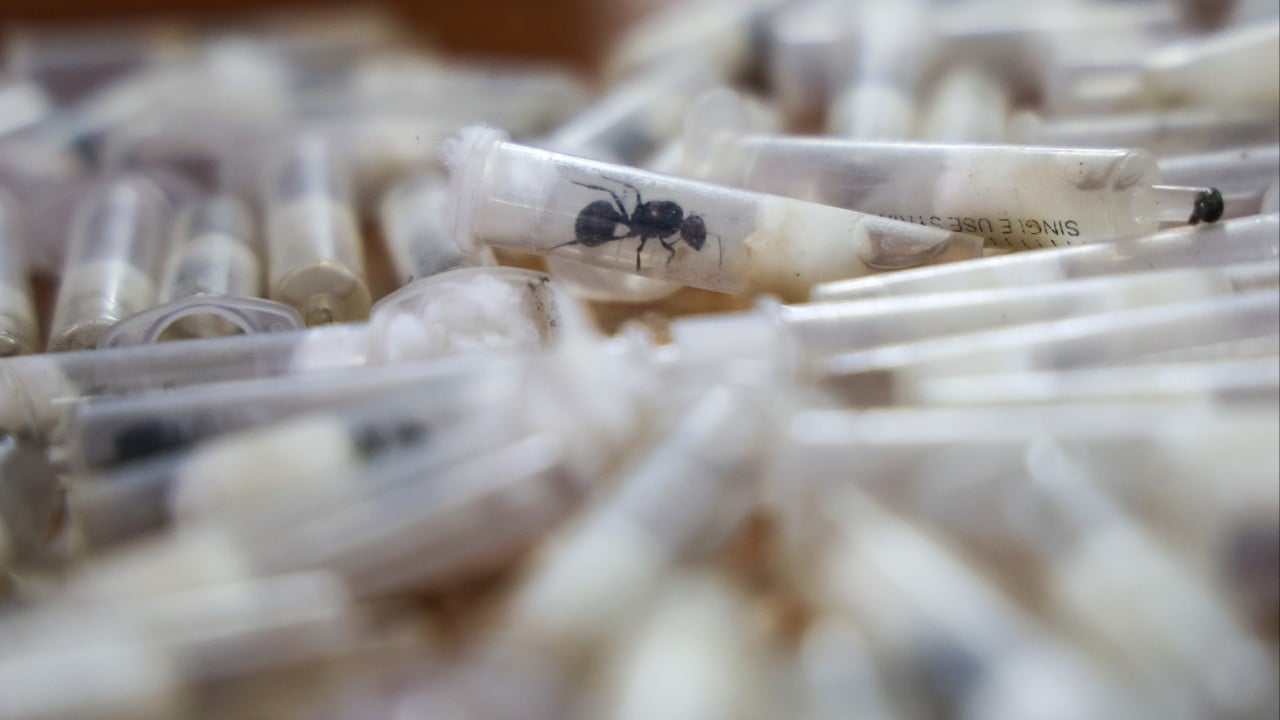
Authorities in East Africa and beyond say a growing black market is moving live ants—specifically queens—out of the region to satisfy overseas demand, raising alarms about wildlife trafficking and ecological damage. Recent detentions and seizures involving hundreds to thousands of insects highlight how quickly an insect trade can become a transnational criminal enterprise.
What Happened
In early March, a 27-year-old Chinese national, Zhang Kequn, was detained at Jomo Kenyatta International Airport in Nairobi, Kenya, after authorities found more than 2,200 live queen ants packed in his luggage.
Around the same period, Thai authorities seized a shipment of ants that had been sent from Kenya’s port city, according to the report. While the details in the provided account do not specify the full quantity in the Thai case, both incidents point to an active pipeline moving ants from East Africa toward overseas buyers.
Background
Ants are not a typical target of international contraband, but the report describes rising demand in places including China and Europe. The specific focus on live queen ants suggests the trade may be tied to keeping colonies alive rather than selling products made from ants.
In many wildlife and insect markets, queen specimens can be highly valuable because they enable breeding and colony expansion. That combination—high demand abroad and the ability to transport live specimens—creates conditions in which organized smuggling can flourish, particularly when shipments travel through major air and sea gateways.
The article also notes that, beyond enforcement challenges, this kind of trafficking can threaten ant populations and the broader environment. Even without detailed species-level data in the account provided, removing large numbers of live queens can disrupt local reproduction and colony survival, with potential ripple effects on ecosystems where ants play roles in soil turnover, scavenging, and food webs.
Why It Matters
This trend is not only about contraband; it reflects a wider global problem of wildlife trafficking that can bypass conventional controls and exploit consumer demand. International insect smuggling can be harder to detect than shipments of traditional wildlife products because insects are small, numerous, and can be moved in ways that appear less conspicuous than larger animals.
For Panama and the wider Latin American region, the broader takeaway is that trafficking networks increasingly operate across continents. While the article centers on East Africa, the pattern—seizures at international transit points and shipments aimed at distant buyers—underscores how quickly illegal wildlife trade can connect distant markets. Countries that serve as trade, logistics, or transportation hubs may face indirect pressure as enforcement priorities and border scrutiny adjust to emerging trafficking routes.
Environmentally, the report’s warning about potential harm to ant populations highlights how trafficking in “small” species can still produce “big” ecological consequences. Ants are among the most widespread and ecologically influential insects; reducing local populations can alter ecological balances in ways that may not be immediately visible to the public.