
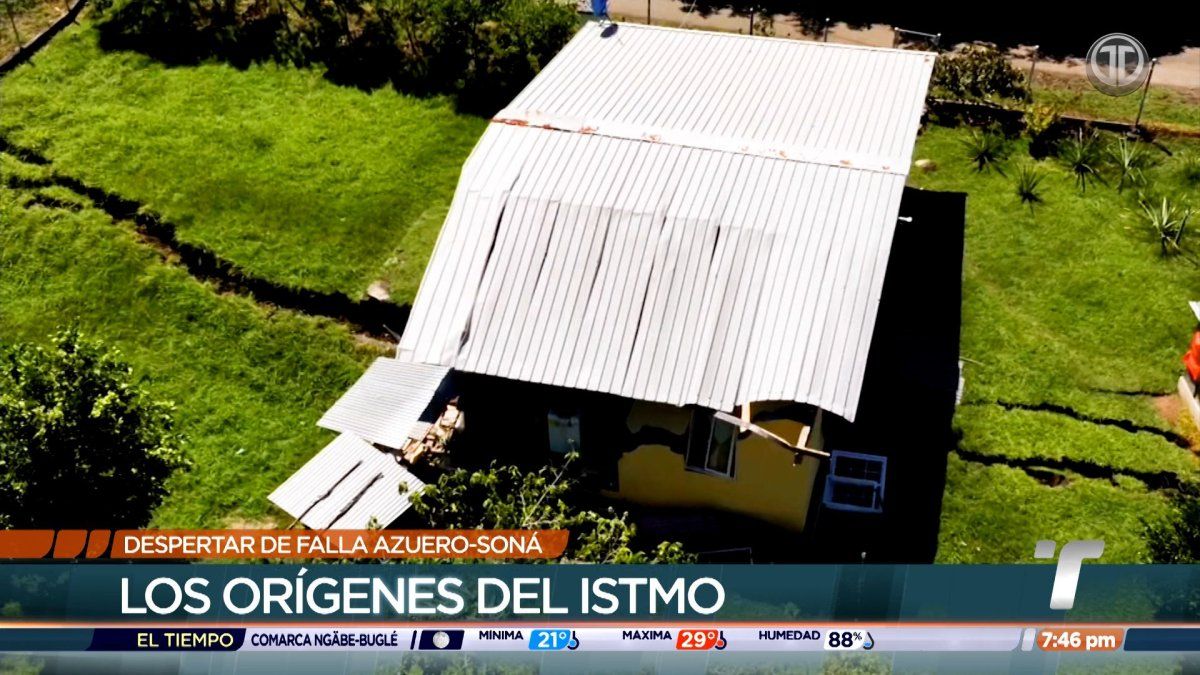
A magnitude 7.5 earthquake linked to the reawakening of the Azuero-Soná fault has drawn national and international scientists to Panama, as the country confronts the exposed geological complexity beneath its surface. Widespread landslides, an unusual double rupture in the terrain, and constant aftershocks have made the event a priority case study for the scientific community.
What Happened
The powerful telúric movement was generated by the Azuero-Soná fault, a geological structure that had remained latent until now. According to Telemetro, the quake left bare what experts describe as Panama’s complex geological anatomy. The event produced a large number of landslides across the affected region and — notably — a double rupture in the ground, an uncommon feature that has captured researchers’ attention.
Aftershocks have continued relentlessly since the main event, keeping communities on alert and providing scientists with a continuous stream of data. The combination of these factors mobilized both Panamanian researchers and international experts, who are now working to study exactly what occurred along the fault.
Background
Panama sits in a tectonically active corner of the world, positioned where the Caribbean, South American, Cocos, and Nazca plates interact. The country’s land bridge between North and South America was formed through intense geological activity over millions of years, leaving it threaded with numerous fault systems. The Azuero-Soná fault is one of these structures, located in the region of the Azuero Peninsula and the Soná district in Veraguas Province on the Pacific side of the country.
For years, such faults were considered capable of producing significant earthquakes, but a magnitude 7.5 event of this character highlights how much remains to be understood about Panama’s subsurface. Fault ruptures of this scale are rare opportunities for geologists: surface breaks and landslide patterns provide direct evidence of how energy stored in the crust is released. A double rupture — two segments of ground breaking in association with one event — is particularly valuable for study because it can reveal how stress transfers within a fault system.
What This Means for Panama
The scientific mobilization now underway could reshape how Panama understands and prepares for seismic risk. Data gathered from the ruptures, landslides, and aftershock sequence will help researchers map the fault’s behavior, assess the hazard it poses, and refine models used to estimate future ground shaking in the region.
For ordinary Panamanians, the persistent aftershocks are a reminder that seismic activity along the fault has not fully settled. The large volume of landslides also points to the vulnerability of steep, saturated terrain in the affected area, a concern relevant to rural communities, roads, and agricultural zones in Veraguas and the Azuero region.
What to watch next: findings from the national and international research teams studying the rupture zone, updated hazard assessments for the Azuero-Soná fault, and how Panamanian authorities respond to any revised understanding of the country’s seismic risk.
This story was originally reported by Telemetro.