
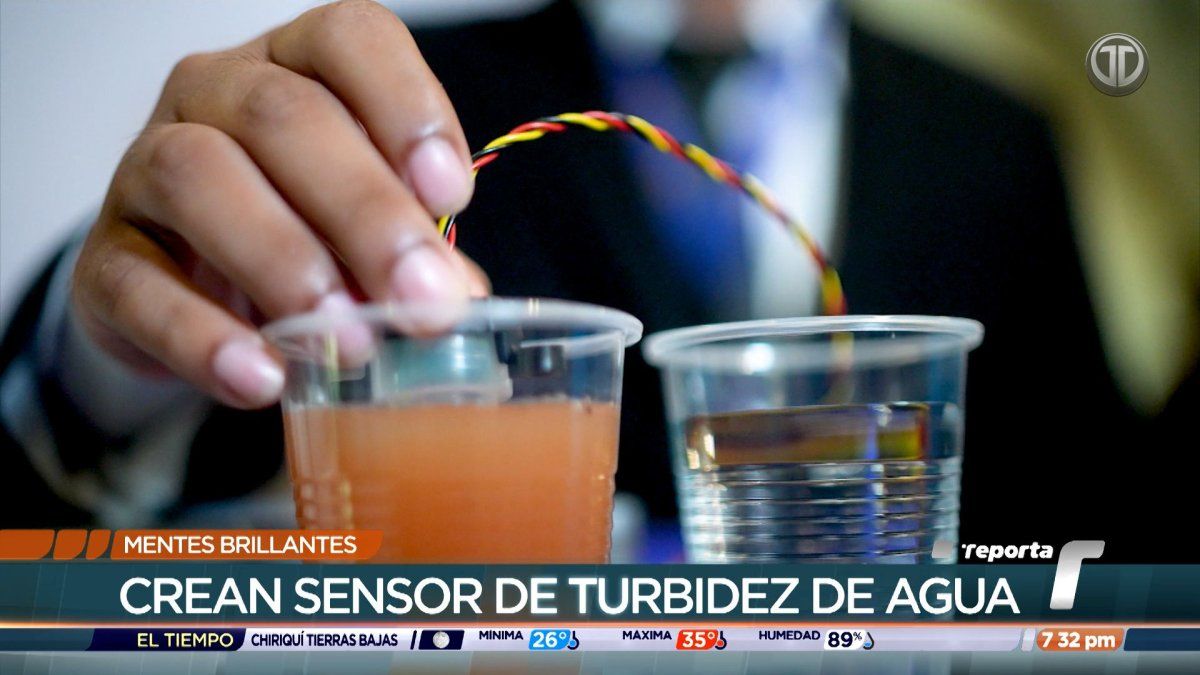
Three university students in Panama have developed a working prototype of a portable sensor capable of measuring water turbidity, a homegrown technological innovation that could help detect changes in water quality and strengthen monitoring of the country’s water resources.
What Happened
The students created the handheld device as a prototype designed to measure turbidity — the cloudiness or haziness of water caused by suspended particles. High turbidity can signal contamination or changes in water quality, making it a key indicator for anyone tracking the health of rivers, reservoirs, and drinking water supplies.
According to a report by Telemetro, which highlighted the project under its “Mentes Brillantes” (Brilliant Minds) segment, the portable sensor is intended as an accessible tool that could contribute to detecting variations in water quality and supporting more consistent monitoring of Panama’s water resources.
The prototype represents the kind of applied science project that emerges when university students apply engineering and scientific knowledge to practical, national problems. Rather than relying on imported laboratory equipment, the device demonstrates that locally developed technology can address locally relevant environmental challenges.
Background
Turbidity is one of the most widely used indicators of water quality worldwide. When sediment, algae, organic matter, or pollutants enter a body of water, they scatter light and make the water appear cloudy. Measuring that cloudiness gives scientists, water utilities, and environmental authorities an early signal that something in the water may have changed.
In Panama, water monitoring carries particular weight. The country’s economy and daily life depend heavily on water, not only for drinking and agriculture but also for the Panama Canal, whose lock system relies on freshwater from Gatun Lake and other reservoirs. Droughts in recent years have lowered lake levels and forced canal authorities to restrict transits, underscoring how closely water availability and water quality are tied to national economic performance.
Rural and indigenous communities in Panama also face challenges with access to reliably clean water, and researchers have repeatedly pointed to the need for better, more affordable monitoring tools across the country’s watersheds. Portable, low-cost sensors could allow more frequent measurements in more locations than traditional laboratory analysis, which typically requires transporting samples to centralized facilities.
What This Means for Panama
If the prototype continues to be developed and validated, a portable turbidity sensor could serve multiple users: universities conducting research, environmental agencies tracking watershed health, water utilities monitoring treatment processes, and community organizations keeping an eye on local rivers and streams.
The project also highlights the role of Panama’s universities as incubators of practical innovation. Student-developed technology that addresses national needs — in this case, water resource monitoring — demonstrates the potential of investing in science, technology, engineering, and mathematics education at home rather than looking abroad for solutions.
What to watch next: whether the prototype advances beyond the laboratory stage, whether the students or their institution pursue partnerships with government agencies or water authorities, and whether similar low-cost monitoring tools begin to spread across Panama’s watersheds. For now, the device stands as proof that young Panamanian engineers are turning their attention to one of the country’s most vital resources.
This story was originally reported by Telemetro.