
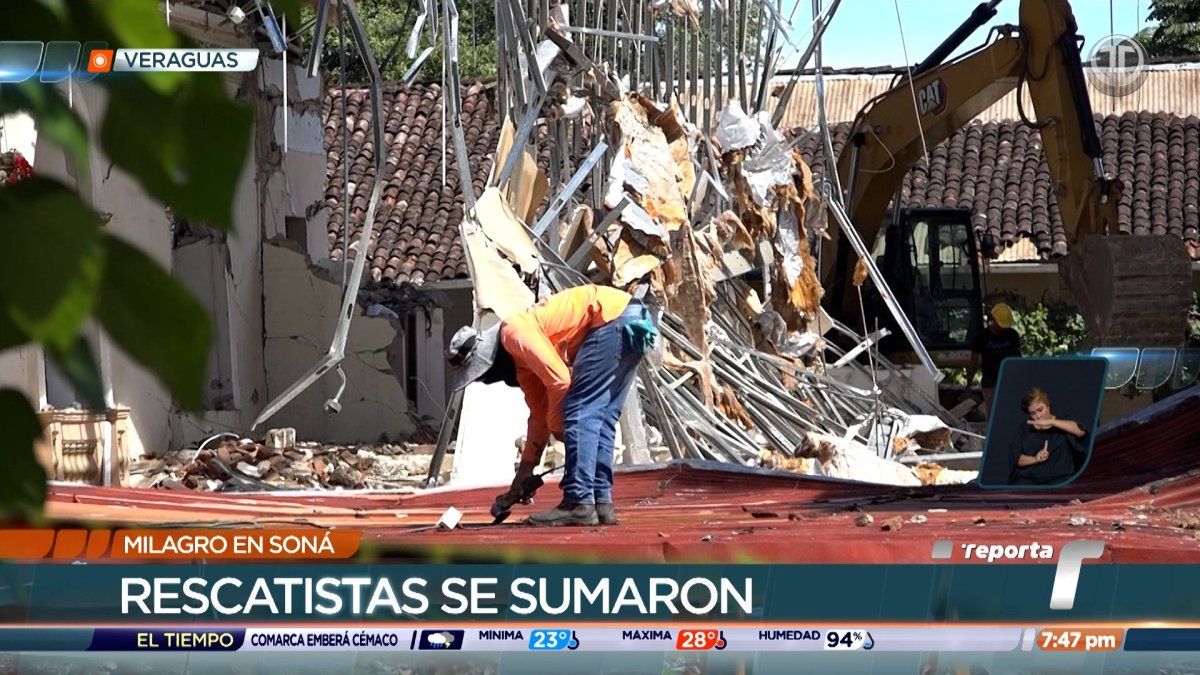
When a powerful 7.5 magnitude earthquake struck Panama on October 9, Amador García, a longtime caretaker of the San Isidro parish in Soná, Veraguas, found himself buried beneath the rubble of the church’s collapsed tower. After more than two hours trapped under the debris, he emerged alive — an outcome he attributes to his faith and his acceptance of God’s will.
What Happened
García has served the San Isidro parish in Soná, a district in the province of Veraguas, for more than 20 years. On October 9, when the 7.5 magnitude earthquake shook Panama, the tower of the parish church collapsed, leaving him trapped underneath the falling structure.
For two hours, García remained pinned beneath the wreckage of the tower he had tended for decades. He ultimately survived the ordeal, telling his story afterward in terms of faith, saying he clung to his beliefs and accepted divine will during those hours beneath the rubble.
Background
The earthquake that struck Panama on October 9 was one of the strongest seismic events in the country’s recent history. Panama sits in a seismically active region where the Caribbean, Cocos, Nazca and South American plates interact, making tremors a recurring phenomenon, though quakes of this magnitude are rare.
The provinces of Veraguas and the surrounding regions of western Panama are home to historic churches, many built decades or even centuries ago. Older masonry structures and bell towers are particularly vulnerable to collapse during strong shaking, which is why seismic events of this size often cause disproportionate damage to religious and heritage buildings compared to modern construction.
Soná is a district in Veraguas province, on Panama’s Pacific coast, where the Catholic parish of San Isidro has long served as a religious and community anchor. Workers like García, who dedicate decades to the upkeep of these churches, are often deeply woven into the fabric of local life.
What This Means for Panama
García’s survival stands out as a story of hope amid the destruction caused by the earthquake, which damaged buildings and infrastructure across affected regions. His account also draws attention to the vulnerability of Panama’s older churches and heritage structures, raising questions about how such buildings should be evaluated and reinforced against future seismic events.
For the community of Soná, the collapse of the San Isidro tower represents both a physical loss and a symbolic one, given the church’s role in local life. As Panama continues assessing earthquake damage and pursuing reconstruction efforts, stories like García’s underscore the human dimension of the disaster — and the long recovery that follows for the communities most affected.
This story was originally reported by Telemetro.