
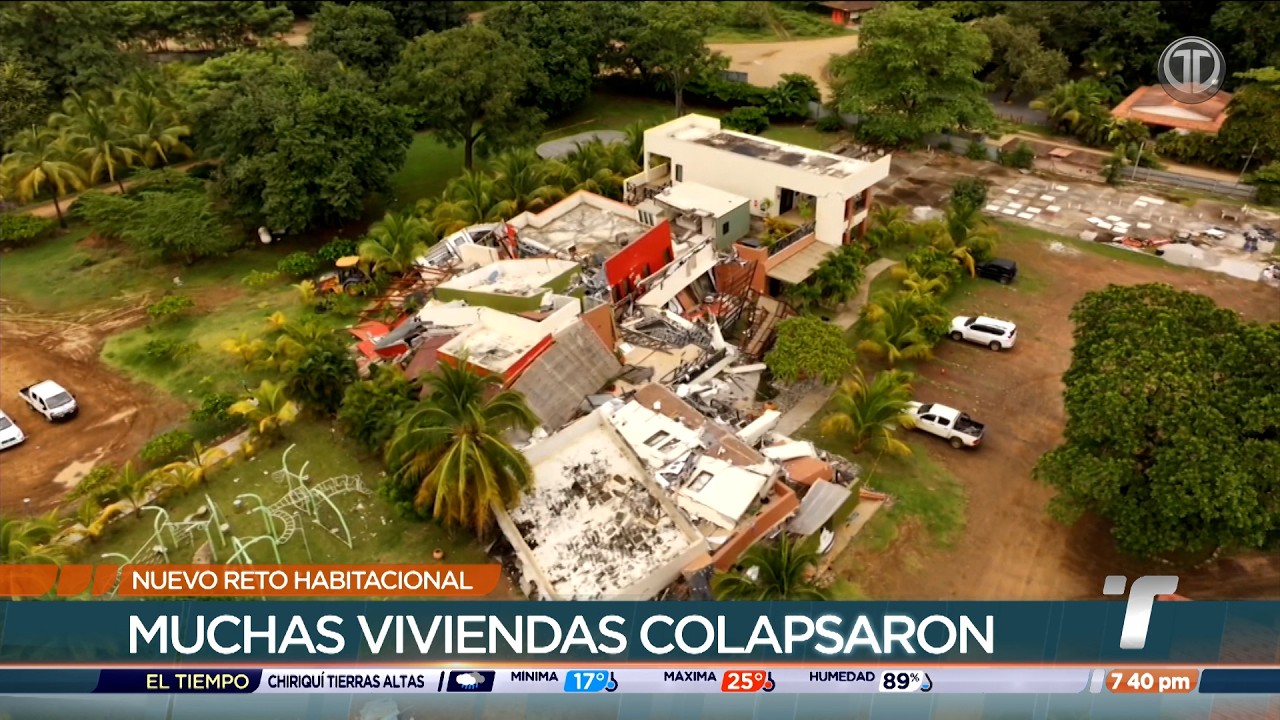
The earthquake that shook Panama this past Friday has left more than just rattled nerves — it has delivered important lessons about how homes across the country are built, according to specialists who say many residences lack the supervision, seismic reinforcement, and compliance with standards needed to withstand strong tremors.
What Happened
Panama registered an earthquake last Friday that, while not causing catastrophic destruction, served as a wake-up call. In the aftermath, specialists have enumerated the deficiencies that affect residential structures during an earthquake, highlighting that many homes are built without adequate supervision and without the seismic reinforcements that modern construction standards demand.
The experts emphasized three key areas of concern: the need for proper supervision during construction, the incorporation of seismic reinforcement in structural design, and compliance with established building standards. According to the specialists, the tremor demonstrated that these elements are often missing or insufficient in Panamanian housing, leaving families vulnerable when the ground shakes.
Background
Panama sits in a seismically active region of Central America, near the junction of several tectonic plates, including the Caribbean Plate and the South American Plate, as well as the Panama Block. This geological setting means the country experiences earthquakes with some regularity, particularly in the western provinces near the border with Costa Rica, such as Chiriquí and Bocas del Toro.
Building codes and seismic standards exist precisely because of this reality. Properly engineered structures — those with reinforced concrete, adequate structural connections, and designs that account for ground movement — are far more likely to survive an earthquake without collapsing. However, in practice, many homes in Panama are built informally or without professional oversight, meaning that theoretical protections on paper do not always translate into safer houses on the ground.
Earthquakes of moderate magnitude often cause little damage to well-constructed buildings but can severely affect poorly built ones. Friday’s event offered specialists a real-world case study of how construction quality determines outcomes when seismic waves reach residential neighborhoods.
What This Means for Panama
The specialists’ assessment turns Friday’s earthquake into a practical lesson: the difference between a scare and a tragedy often comes down to how homes were built. For homeowners and buyers, the findings underscore the importance of verifying that properties were constructed with proper supervision and in compliance with seismic standards.
For policymakers and construction authorities, the earthquake renews attention on enforcing building regulations and ensuring that new residential construction incorporates seismic reinforcement from the ground up. The event also highlights the value of public awareness, so that families planning to build or renovate understand the risks of cutting corners on structural safety.
What to watch next is whether Friday’s tremor prompts stronger enforcement of existing construction standards or renewed public discussion about housing safety in Panama’s seismically active zones. For now, specialists are clear on the core message: supervision, seismic reinforcement, and compliance with standards are not optional extras — they are essential protections for Panamanian families living with the reality of earthquakes.
This story was originally reported by Telemetro.