
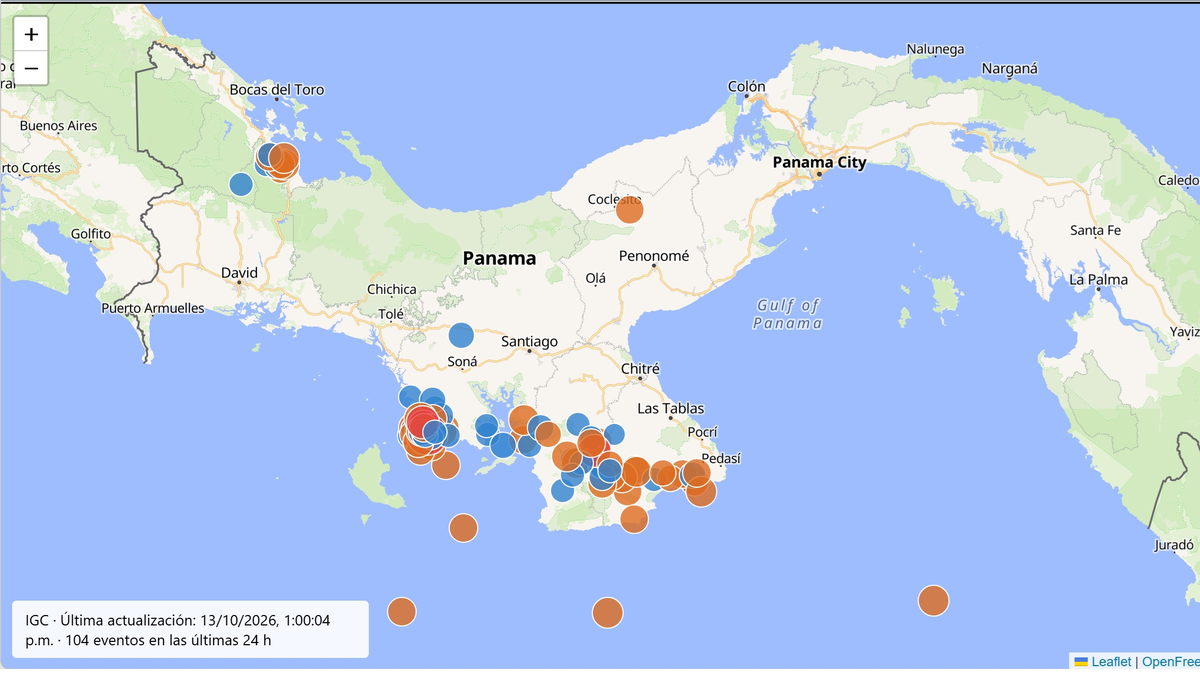
Panama continues to feel the earth move days after a strong earthquake struck the country on Friday, October 9, and one of the nation’s top seismic experts has a clear message: the aftershocks are a completely natural phenomenon — and they may not stop anytime soon.
What Happened
Following the earthquake recorded on October 9, residents across parts of Panama have experienced repeated aftershocks, known in Spanish as réplicas. According to statements released by the Secretaría Nacional de Ciencia, Tecnología e Innovación (SENACYT), Luis Pinzón, a doctor in Seismic Engineering and Structural Dynamics who also holds a master’s degree in Ground Engineering and Seismic Engineering, explained that these aftershocks are part of a natural geological process.
Pinzón emphasized that this process of successive tremors can extend over widely varying timeframes — lasting hours, days, weeks, or even months after the initial earthquake. There is no fixed schedule for when the ground will settle, which is why he urged the public to remain informed through official channels and to take appropriate precautions during this period of ongoing seismic activity.
Background
Aftershocks occur as the Earth’s crust adjusts after a major earthquake. When a significant seismic event ruptures the ground along a fault, the surrounding rock mass continues to redistribute stress, producing smaller quakes in the aftermath. While individually these tremors are typically weaker than the main event, they can still be felt by the population and, in some cases, may cause additional damage to structures already weakened by the initial shock.
Panama’s geographic position explains its seismic exposure. The country sits in a tectonically active region of Central America where the Caribbean, South American, and other tectonic plates interact. This makes earthquakes a recurring feature of life in Panama, and it is the reason institutions such as SENACYT work to communicate scientific understanding of these events to the public.
Experts like Pinzón, whose training spans seismic engineering, structural dynamics, and ground engineering, play a key role in helping Panamanians distinguish between alarming rumors and the scientific reality of what their country experiences after a major quake.
What This Means for Panama
The key takeaway from SENACYT’s guidance is patience and preparation. Because aftershocks can continue for an extended period, residents should not assume the danger has passed simply because days have gone by without a major tremor. Authorities advise the public to follow official information channels for updates on seismic activity rather than relying on unverified reports circulating on social media.
For households and businesses, this is also a moment to review basic earthquake safety measures: knowing evacuation routes, avoiding unnecessary time in structurally compromised buildings, securing heavy objects that could fall during a tremor, and having emergency supplies on hand.
For Panama more broadly, the episode underscores the importance of ongoing investment in seismic monitoring, public education, and earthquake-resistant construction standards. As the country continues to develop its infrastructure, the scientific community’s voice — translated into clear public guidance like that provided by SENACYT — will remain essential in helping citizens respond calmly and safely to the natural forces shaping the region.
Residents are encouraged to report felt tremors through official channels and to stay alert to communications from national authorities as the aftershock sequence follows its natural course in the coming days and weeks.
This story was originally reported by Telemetro.