
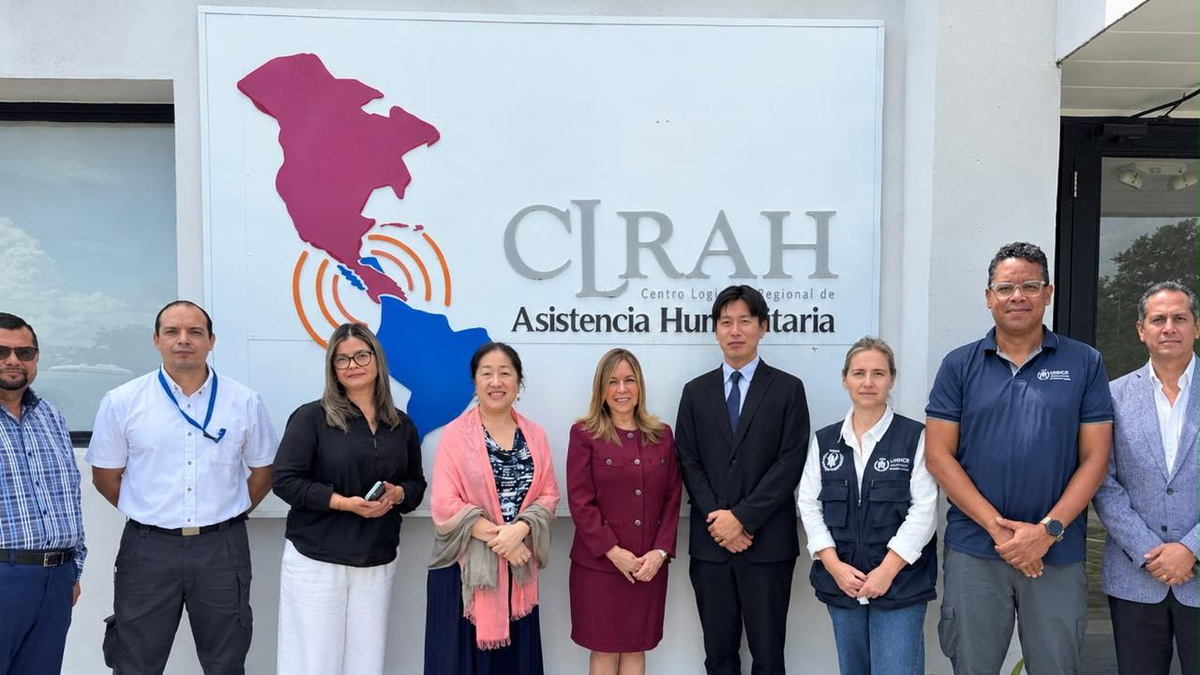
The Embassy of Japan in Panama has carried out its first official visit to the Regional Humanitarian Assistance Logistics Center (CLRAH), widely known as the Humanitarian Hub, signaling Japanese interest in deepening cooperation with Panama on emergency and disaster response across Latin America.
What Happened
Embassy representatives toured the facility to gain firsthand knowledge of its operational capabilities, according to a report by Telemetro. The visit marked the first time the Japanese diplomatic mission in Panama had visited the center. The stated purpose was twofold: to understand how the hub functions logistically, and to explore concrete opportunities for collaboration between Japan and Panama in strengthening humanitarian response throughout the region.
The delegation’s engagement reflects growing international attention to the Humanitarian Hub as a strategic asset for coordinating the storage, pre-positioning, and distribution of relief supplies when emergencies and natural disasters strike countries in Latin America.
Background
The Regional Humanitarian Assistance Logistics Center, located in Panama, has emerged as a key node for humanitarian logistics in the Americas. Panama’s geographic position — bridging North and South America and flanked by the Pacific Ocean and Caribbean Sea — makes it a natural staging ground for rapid deployment of aid to disaster-affected areas across the hemisphere.
Latin America and the Caribbean are highly exposed to natural hazards, including hurricanes, earthquakes, floods, and droughts, which regularly generate urgent humanitarian needs. Logistics centers like the CLRAH help international agencies and governments respond faster by keeping relief supplies close to potential disaster zones rather than shipping them from distant continents after a crisis begins.
Japan, for its part, is one of the world’s most experienced nations in disaster preparedness and response, given its own exposure to earthquakes, tsunamis, and typhoons. Japanese cooperation agencies have a long track record of supporting disaster-risk-reduction initiatives abroad, and diplomatic outreach to humanitarian logistics platforms is consistent with that tradition.
What This Means for Panama
For Panama, Japanese interest in the Humanitarian Hub reinforces the country’s role as a regional logistics power that extends well beyond commercial trade through the Panama Canal. Deepened cooperation with Japan could bring additional technical expertise, resources, and international partnerships to a facility whose value depends on strong global support.
The visit also aligns with Panama’s broader diplomatic positioning as a hub for multilateral cooperation. Strengthening ties with a major partner like Japan in the humanitarian field could open doors for training, equipment, and coordinated emergency response frameworks benefiting the entire region.
What to watch next: whether this initial visit translates into formal agreements, funding commitments, or joint programs between Japan and the Humanitarian Hub. Follow-up diplomatic engagements and any announced cooperation initiatives would signal how far this relationship develops in practice.
This story was originally reported by Telemetro.