
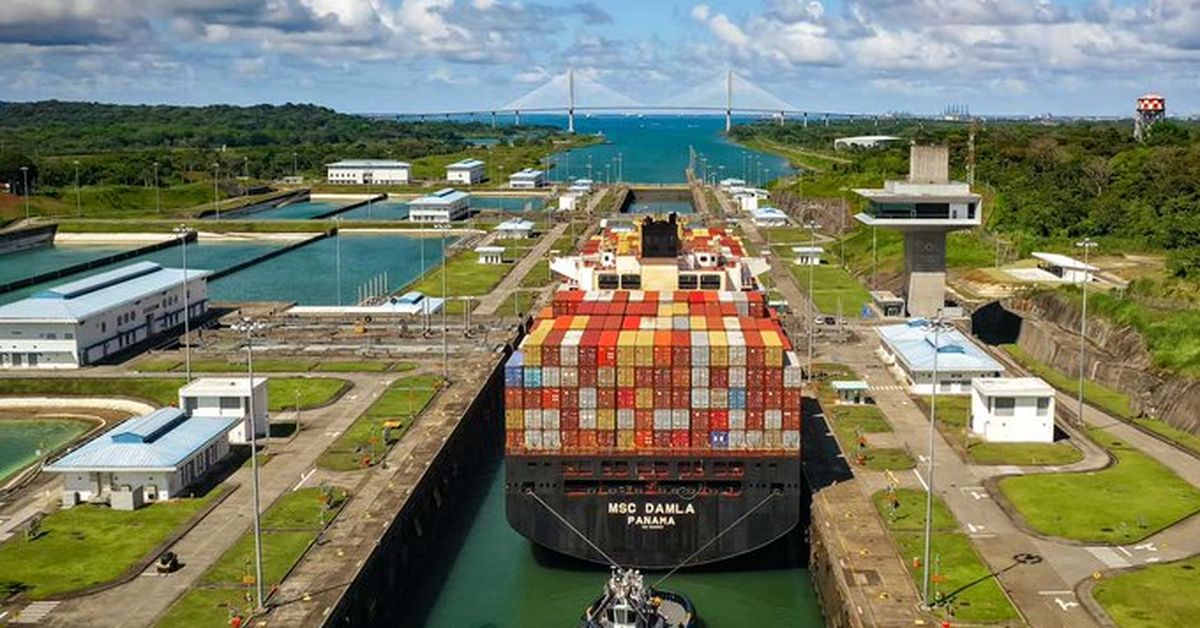
The Panama Canal will increase its daily transit capacity to 33 vessels beginning October 15, marking another step in the waterway’s recovery after the severe drought restrictions that sharply curtailed operations in recent years. The adjustment includes 10 daily slots through the Neopanamax locks and a maximum authorized draft of 14.94 meters (49 feet).
What Happened
The Panama Canal Authority announced that, effective October 15, the number of daily transits will rise to 33 total slots. Of these, 10 transits per day will be allocated to the Neopanamax locks, the larger lock system that accommodates the biggest vessels passing through the waterway, including container ships and liquefied natural gas carriers.
In addition to the increased transit slots, the Canal has authorized a maximum draft of 14.94 meters, equivalent to 49 feet. Draft restrictions directly affect how much cargo vessels can carry, so a deeper allowable draft means ships can load more goods before making the crossing between the Atlantic and Pacific oceans.
Background
The Panama Canal is one of the world’s most important trade arteries, connecting the Atlantic and Pacific oceans and handling roughly five percent of global maritime trade. Its operations depend heavily on rainfall, which feeds Gatun Lake, the freshwater source that makes the lock system work. Each transit consumes millions of gallons of fresh water.
In 2023 and 2024, an severe drought driven by the El Niño weather pattern caused water levels in Gatun Lake to fall dramatically, forcing the Canal to cut daily transits to as few as 22 at the lowest point and impose strict draft limits. Those restrictions created costly backlogs, led some shipping companies to reroute vessels around Cape Horn or through the Suez Canal, and raised questions about the long-term reliability of the route.
Since then, improved rainfall conditions have allowed the Canal Authority to gradually restore capacity through a series of incremental increases announced over successive months. Each step has been conditional on lake levels remaining adequate.
What This Means for Panama
The move to 33 daily transits signals that the Canal is operating close to its normal historical capacity of around 36 to 38 transits per day. For Panama, this is significant both economically and reputationally: toll revenue from the Canal is a major contributor to the national treasury, and the reliability of the waterway directly influences global shipping decisions.
Restoring the 49-foot draft for Neopanamax vessels is equally important for the Canal’s competitiveness, as deeper drafts allow the largest ships to transit with fuller loads, improving cost efficiency for customers and strengthening toll revenues.
For the shipping industry, more slots and deeper drafts mean fewer auction pressures for transit reservations and better planning certainty ahead of the year-end peak shipping season. For Panama, the challenge remains managing the waterway’s dependence on freshwater amid climate variability, a concern the Canal Authority has addressed through water conservation initiatives and long-term infrastructure planning.
Observers will be watching whether lake levels continue to support this capacity through the remainder of the rainy season, and whether the Canal can eventually return to full pre-drought operating levels.
This story was originally reported by TVN 2.