
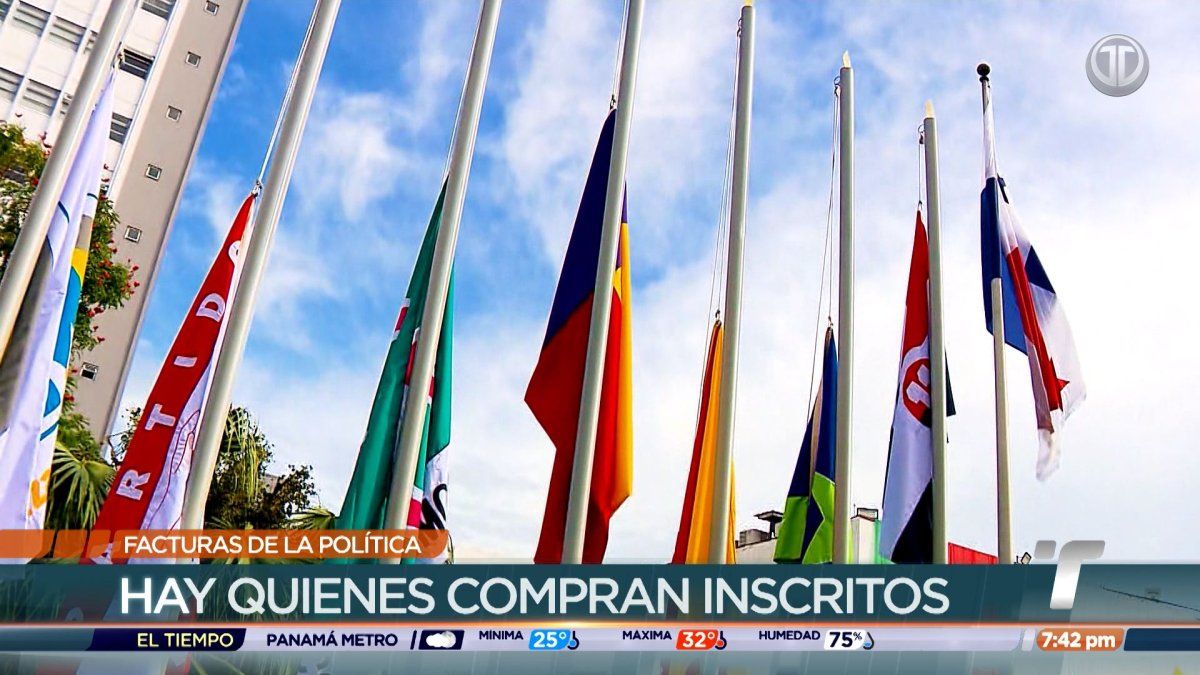
Panama currently has nine registered political parties competing for voters’ attention, but analysts are increasingly questioning the true cost of maintaining such a fragmented party system — and what critics call the “invoices of politics” that ordinary Panamanians ultimately pay.
What Happened
Journalist Hugo Famanía sat down with specialists to examine the financial and institutional costs of creating political parties in Panama. The discussion, broadcast by Telemetro, explored how new political groupings emerge frequently, yet many fail over time to develop meaningful public policies that benefit the country.
Today, nine parties make up Panama’s electoral offering. But throughout the nation’s democratic history, numerous parties have come and gone, dissolving after failing to secure enough votes or consolidate a lasting institutional presence. The report highlights how the cycle of party creation and disappearance generates recurring costs — both direct financial costs to the state and broader costs in terms of governance and public trust.
Background
Panama’s party system has long been characterized by fragmentation. Electoral rules allow relatively accessible pathways for founding new parties, which has encouraged frequent splits and the creation of new organizations, particularly ahead of general elections. To retain legal status, parties must meet vote thresholds established by the Electoral Tribunal; those that fall short lose their registration.
Registered parties in Panama receive public financing and post-election state funding, known as the electoral subsidy, intended to strengthen democratic participation. Critics argue that when parties are created without durable programs or grassroots support, this public money is effectively wasted — a phenomenon described in the Telemetro report as the “facturas de la política,” or the invoices of politics.
The problem is not new. Over the decades, dozens of parties have vanished from the electoral registry, often after a single poor electoral performance. Meanwhile, analysts note that party churn can weaken opposition politics, fragment congressional votes, and make coalition-building more difficult — while doing little to advance concrete public policy on issues such as education, health, and security.
What This Means for Panama
The debate raised by the Telemetro report puts pressure on policymakers to reconsider the rules governing party creation and financing. Possible areas of scrutiny include raising the requirements for party registration, tightening the vote threshold needed to keep legal status, and increasing transparency around how public electoral funds are spent.
For voters, the discussion is a reminder that political parties are not cost-free: public money allocated to parties that fail could otherwise support national priorities. As Panama approaches its next electoral cycle, observers will be watching whether the Electoral Tribunal or the National Assembly moves to reform party financing rules, and whether the current nine-party landscape consolidates or fragments further.
This story was originally reported by Telemetro.