
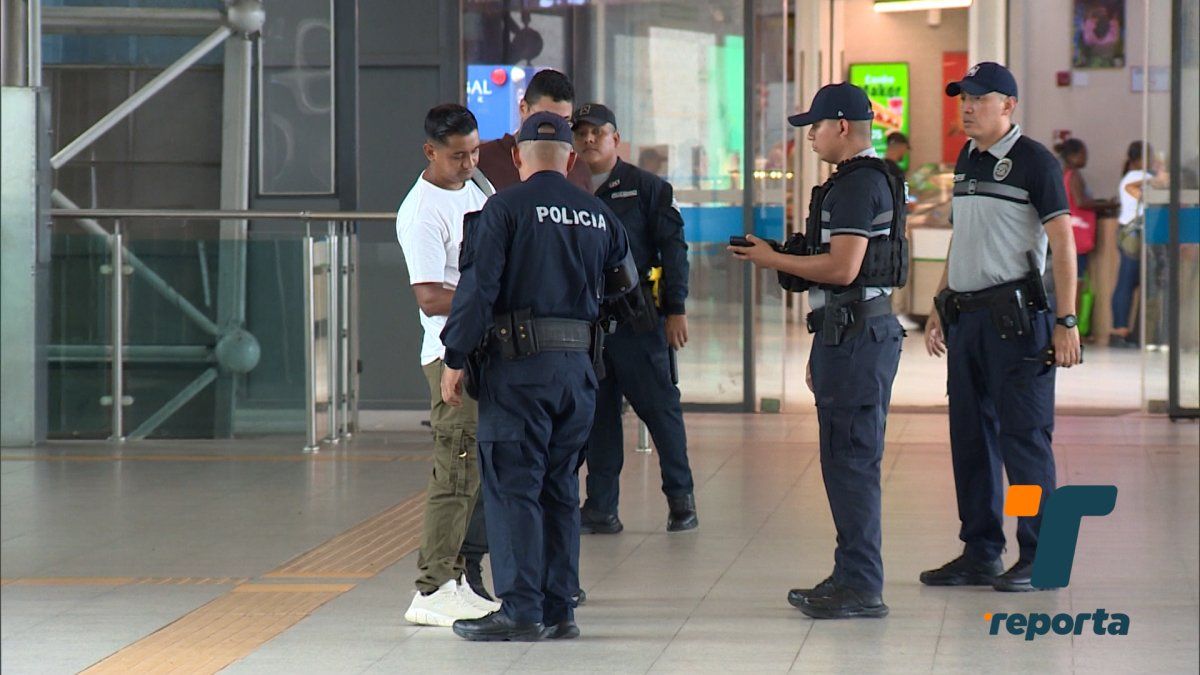
More than 30,000 people are checked by Panama’s National Police at Panama Metro stations every week, and the most common result of those verifications is not a violent crime or theft warrant — it is an oficio de desacato, a contempt order linked to unpaid child support (pension alimenticia), according to police officials.
What Happened
The National Police (Policía Nacional) carries out over 30,000 verifications of individuals each week across the stations of the Panama Metro, the country’s busiest public transportation system. During these routine checks, officers consult records to determine whether a passenger is subject to an outstanding judicial order.
According to the police, the offense most frequently detected through this process is the contempt warrant for failure to pay child support. These orders are issued by courts when a parent who is legally obligated to pay alimony or child maintenance has failed to comply with a judicial ruling. When officers identify a person with such an order during a Metro station check, the individual can be detained so the judicial process can proceed.
Background
The Panama Metro, which serves the capital and surrounding areas, is one of the country’s most heavily used transit systems, moving hundreds of thousands of riders daily. Its stations have long served as fixed points for police presence, both as a security measure for passengers and as a tool for verifying whether individuals are wanted under court orders.
Child support obligations in Panama are enforced through the courts, and a desacato order is one of the legal mechanisms available when a parent fails to meet those obligations. Non-payment of child support, known as incumplimiento de pensión alimenticia, is treated as a serious matter under Panamanian law because it directly affects the welfare of children who depend on that financial support.
The fact that contempt orders for child support top the list of detections at Metro stations reflects the large volume of such cases in the country’s judicial system and the role that routine police verification plays in enforcing family law rulings. Because the Metro concentrates so much daily passenger traffic, the stations function as a natural checkpoint where individuals with pending orders are likely to be identified.
What This Means for Panama
The scale of the operation — more than 30,000 verifications weekly — illustrates how integrated police checks have become in the daily life of the capital’s transit system. For passengers, the presence of officers in stations is a routine part of commuting in Panama City.
For parents behind on child support payments, the data sends a clear signal: outstanding contempt orders can surface at any Metro station, at any time, as part of ordinary police work rather than a targeted operation. This may serve as an incentive for those with pending obligations to regularize their situation with the courts.
The statistic also draws attention to the broader issue of child support compliance in Panama. With contempt orders being the most frequently detected infraction in these checks, the figures point to the volume of unresolved family support cases moving through the justice system, and to the practical role that public transit enforcement plays in compelling compliance with court-ordered obligations.
As the police continue their verification program across Metro stations, riders can expect the checks to remain a constant feature of the system, and the number of detected child support contempt orders will likely remain a key indicator of how effectively these judicial rulings are being enforced.
This story was originally reported by Telemetro.