
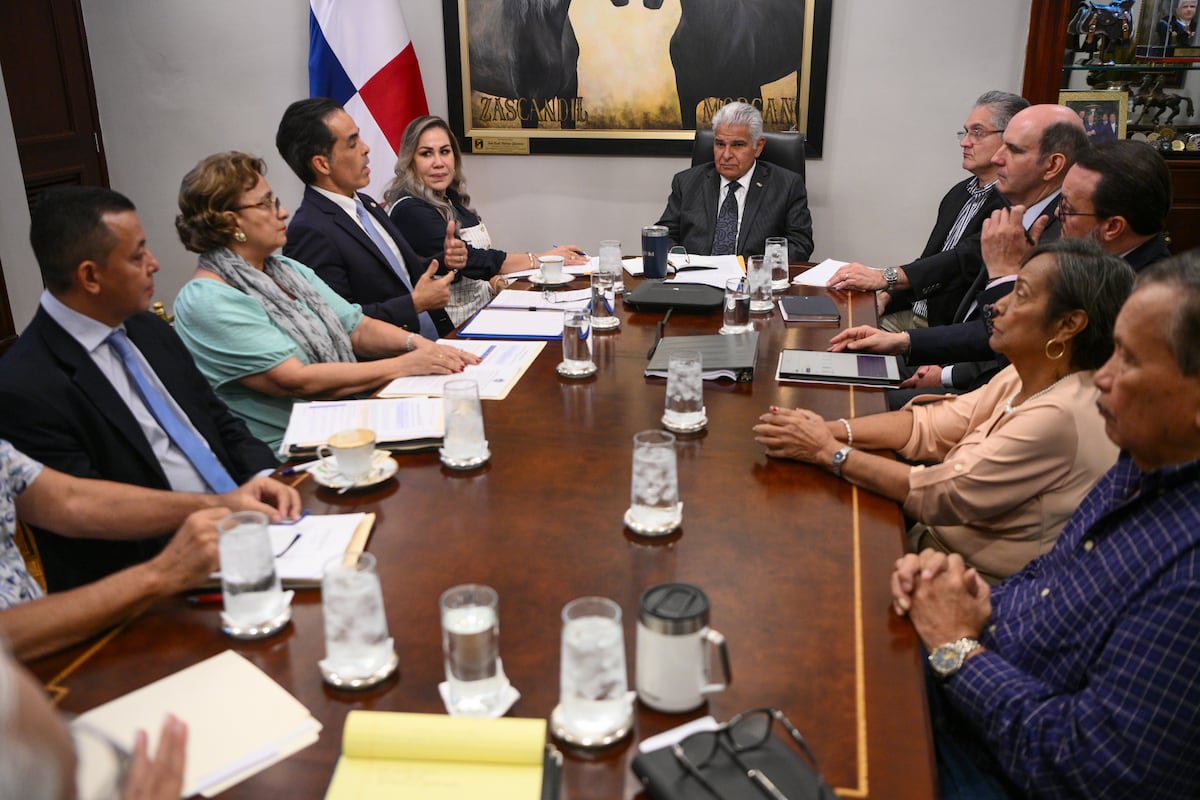
President José Raúl Mulino convened retirees’ representatives and business leaders at the Palacio de las Garzas on Wednesday, September 9, to hear their positions on a landmark bill that would expand discounts and benefits for Panama’s seniors, as he weighs whether to sign or veto the legislation already approved by the National Assembly.
What Happened
The meeting, scheduled for 3:00 p.m., brought together Guillermo Cortés, president of the Asociación de Jubilados; Aurelio Barría Pino, president of the Cámara de Comercio, Industrias y Agricultura; and National Assembly President Shirley Castañedas. Ministers in attendance included Felipe Chapman of Economy and Finance, Juan Carlos Orillac of the Presidency, and Julio Moltó of Commerce and Industries.
The gathering follows the Assembly’s approval of bill 226 in its third debate, passed by the plenary with 47 votes. The initiative now sits with the Executive for sanction or veto. It modifies Law 6 of June 16, 1987, significantly expanding the framework of discounts available to retirees, pensioners and seniors in areas previously not covered.
Under the bill, seniors would receive a 25% discount on health and personal hygiene products, and 30% off adult disposable diapers. In the financial sector, fees, charges, commissions and insurance tied to credit and debit cards would carry a minimum 30% discount — benefits not contemplated in the original 1987 law.
Utility discounts would also grow. The electricity discount would rise from 25% to 30%, with the income limit from the 1987 law eliminated, applying to consumption of up to 700 kilowatt-hours in a principal residence. Drinking water would receive a 30% discount for the first time, for residential consumption of up to 50 dollars per month, plus a 20% discount on waste collection fees.
Telecommunications benefits include a 30% discount on residential landline fixed charges for one number, 30% off internet and cable television contracts of up to 50 dollars, and 30% off mobile phone contracts of up to 60 dollars.
Background
Mulino had signaled ahead of the meeting that any law of this nature must have sustainable financial backing. He has publicly criticized lawmakers for approving legislation without identifying where the funds will come from, remarking that one cannot simply pass laws without knowing the source of the resources.</p>
In recent days, retiree groups have publicly urged the President to sign the law. But Mulino has emphasized caution, noting that vetoing the measure would make him the villain in the story, while insisting that any benefit must be economically sustainable.
The existing framework of senior discounts in Panama dates back nearly four decades to Law 6 of 1987, which established the original benefits the new bill seeks to expand. The proposed changes would mark one of the most significant overhauls of that system since its creation.
What This Means for Panama
The decision before Mulino carries significant political and fiscal weight. Signing the law would deliver meaningful cost-of-living relief to Panama’s seniors across health, financial services, utilities and telecommunications — sectors that touch nearly every household budget. Vetoing it, however, would preserve fiscal discipline amid the President’s stated concerns about unfunded mandates.
The inclusion of the Chamber of Commerce president in the talks signals that the business sector’s concerns about the cost of implementing the discounts are also on the table, since merchants, banks and service providers would absorb or administer much of the impact.
For now, all eyes are on the Palacio de las Garzas. Whatever Mulino decides will shape the relationship between his administration, the National Assembly and one of Panama’s most organized and vocal constituencies — its retirees.
This story was originally reported by La Prensa.