
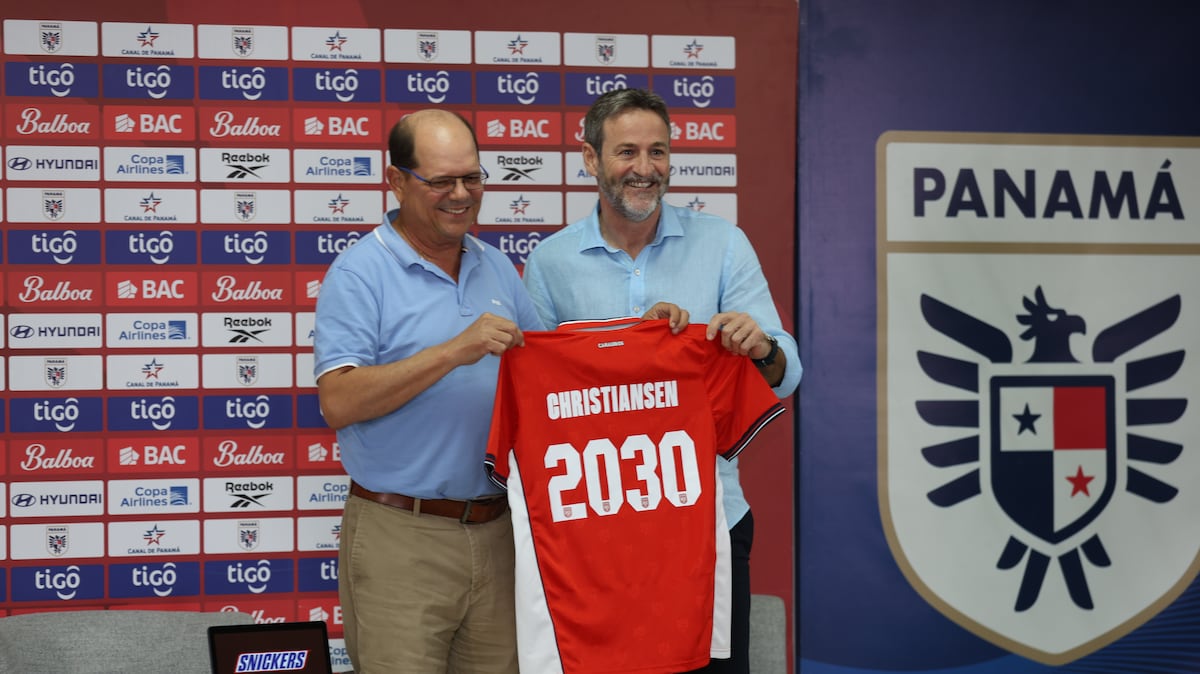
Thomas Christiansen has officially begun his third cycle as head coach of Panama’s national team, laying out an ambitious roadmap that includes winning a first major title, completing a gradual generational transition, and qualifying for the next FIFA World Cup.
What Happened
Speaking at the Panamanian Football Federation alongside federation president Manuel Arias following his contract renewal, the Spanish coach explained his decision to continue leading La Roja. He cited both personal attachment and the sporting project backed by the federation.
“Panamá lo tengo en el corazón, me ha dado mucho en estos años. Cuando tienes que tomar una decisión deportiva o familiar, te tienes que sentir a gusto, valorado,” Christiansen said. “La ambición que ha demostrado la federación para esta renovación ha sido importante, con la metodología, infraestructura y eso es pensar en grande y mejorar.”
The coach also reviewed Panama’s performance at the 2026 FIFA World Cup, praising the team’s competitiveness while acknowledging that the internal ambition remains higher.
“Uno tiene que ser ambicioso y aspirar a más. Me quedé con las ganas de meter un gol y de conseguir puntos, pero creo que competimos muy bien,” he said. “Contentos con lo realizado, pero siempre queremos más y el equipo también.”
Christiansen addressed the case of midfielder Adalberto Carrasquilla, explaining that his World Cup squad inclusion was based on the progress he showed after an injury, before he later suffered a setback.
Looking ahead, the coach announced a 27-player squad for the upcoming Asian tour, potentially featuring seven or eight new names. Panama faces India on September 25, then travels to Japan for a tournament that includes a match against New Zealand on October 1 at Yokohama International Stadium. Depending on results, Panama will play either the final or the third-place match on October 5 at Tokyo’s National Stadium.
Background
Christiansen has been one of the most consequential coaches in Panamanian football history, guiding the national team through multiple competitive cycles. His previous tenure included deep runs in Concacaf competitions and Panama’s participation in the 2026 World Cup, where the team competed well despite falling short of scoring goals and earning points.
As part of the renewed project, the federation has hired Spanish coach Pedro Morilla Pineda as a youth-team head coach and methodology coordinator. Christiansen revealed he had tried to bring Morilla in years earlier, but the move did not materialize because Morilla was succeeding in China at the time.
“Pedro tiene mucha experiencia en formación, en el fútbol profesional,” Christiansen said, noting Morilla’s background in technical direction, scouting, and sporting management. His role will ensure a unified methodology from the senior team down through the youth categories.
Christiansen also highlighted the improvement of Panama’s young talent, saying players in the lower categories are now better prepared to handle the demands of international football.
What This Means for Panama
The contract renewal provides stability for a national team entering a transition period. Christiansen was direct about his targets: winning a title, whether in the Concacaf Nations League or the Gold Cup, and qualifying for the next World Cup.
“Es lógico que el siguiente paso es intentar ganar un título. No es fácil,” he acknowledged.
The generational overhaul will be gradual rather than abrupt, combining experienced players with youth, particularly in key competitions. In November, Panama will aim to secure qualification for both the Concacaf Nations League Final Four and the 2027 Gold Cup when it plays the quarterfinals of the Nations League.
The September friendlies against India and the tournament in Japan will offer an early look at the new faces expected to shape the team’s future, while Morilla’s appointment signals a structural investment in developing talent from the ground up with a single, consistent playing philosophy.
This story was originally reported by La Prensa.