
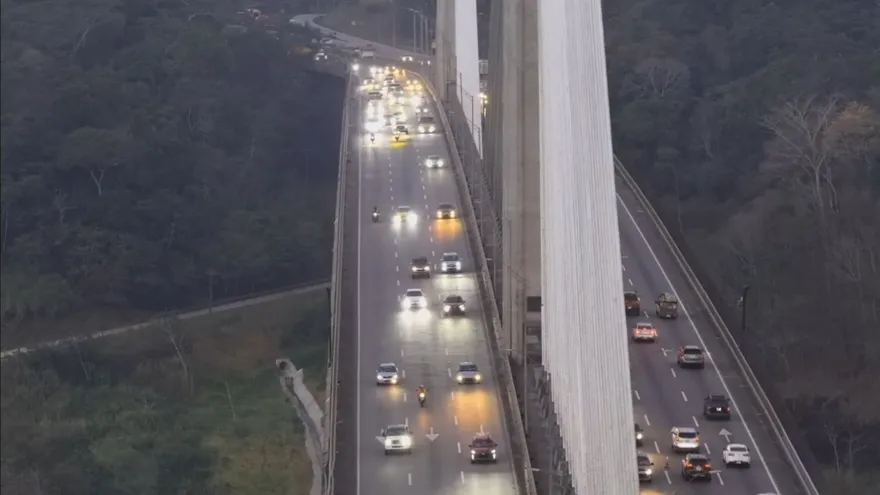
What Happened
The National Authority for Land Transit and Transportation, known as ATTT, has adjusted the schedule for heavy-vehicle restrictions on Vía Centenario, with the new rules taking effect on April 20. The measure changes the hours when freight and other heavy transport vehicles may circulate on one of the main road corridors connecting Panama City and nearby districts.
The update is intended to manage traffic flow on a route that carries significant daily movement between the capital and surrounding areas. Vía Centenario is a key roadway for passenger vehicles, cargo transport, and commercial activity, so changes to heavy-truck access can affect both mobility and logistics.
Why the Measure Matters
Restrictions on heavy transport are commonly used in Panama to reduce congestion during peak traffic periods and improve road safety on busy urban corridors. By adjusting the hours for truck circulation, authorities seek to better separate freight movement from the heaviest commuter traffic.
For transport operators, the new timetable will require route planning and delivery scheduling to align with the revised hours. For drivers using Vía Centenario, the change may influence traffic conditions, especially during the periods covered by the restriction.
Context for Panama City Traffic
Vía Centenario is an important link in the metropolitan road network and often handles pressure from both local traffic and vehicles moving goods across the region. In Panama, transport measures of this kind are part of broader efforts to ease bottlenecks in high-traffic areas, particularly around the capital.
ATTT’s decision fits within that broader traffic-management approach, where authorities periodically adjust circulation rules in response to roadway use, congestion patterns, and safety needs. Such measures are especially relevant in corridors that serve mixed traffic, including private cars, buses, and freight trucks.
What Drivers Should Know
Heavy-vehicle operators using Vía Centenario will need to follow the updated schedule beginning April 20. Drivers and logistics companies that depend on the route should review the new restriction hours to avoid delays and possible enforcement action.
For the wider public, the change is likely to be felt through traffic patterns on the road itself, especially at times when freight movement is limited and passenger traffic becomes the dominant flow. The update underscores the continuing effort to balance commerce and mobility in Panama’s capital region.