
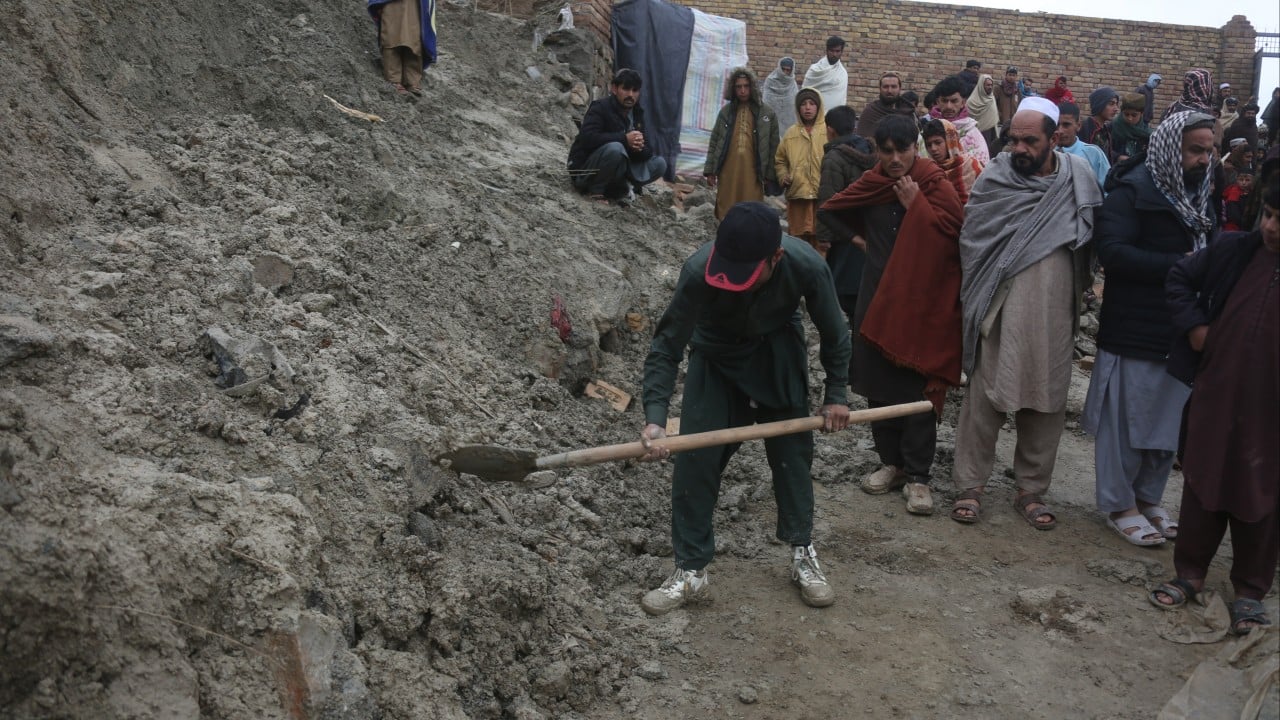
An earthquake in Afghanistan overnight killed at least 12 people, including eight members of the same family, after a deep tremor shook parts of the country and was felt far beyond its northeastern epicenter. The deaths underscore the vulnerability of Afghan communities already coping with displacement, poverty and fragile infrastructure.
What Happened
A 5.8-magnitude earthquake struck at 8:42 p.m. local time on Friday, with the epicenter in northeastern Badakhshan province at a depth of 186 kilometers. The quake caused fatalities in and around Kabul, where rescue workers and local residents searched through damaged areas after the tremor.
Among those killed were eight members of one family on the outskirts of the capital. A neighbor who joined rescue efforts said the family had recently returned to Afghanistan from neighboring Iran after living there as refugees. Afghan authorities and the Afghan Red Crescent Society confirmed the overall death toll at 12.
Deep earthquakes can be felt across a wide area because seismic waves travel efficiently through the earth’s crust, even when the epicenter is far from the places that suffer the worst consequences. In this case, the tremor’s depth helped spread the shaking across a broad swath of Afghanistan.
Background
Afghanistan sits in one of the world’s most seismically active regions, where the collision of tectonic plates regularly produces earthquakes. The country has also endured repeated natural disasters in recent years, including deadly quakes that have exposed the weakness of housing in rural and urban areas alike.
The impact is often magnified by years of conflict, economic crisis and mass displacement. Many Afghan families live in fragile homes or informal settlements, and returning refugees can face especially difficult conditions as they try to rebuild their lives after years abroad. Iran hosts a large Afghan refugee population, and returns from Iran have been a continuing feature of the region’s migration pressures.
In Afghanistan, even moderate seismic events can become deadly when they strike communities with limited emergency services and poor access to medical care. The country’s mountainous terrain and uneven infrastructure can also slow rescue operations, especially in remote provinces where roads and communications are unreliable.
Why It Matters
The earthquake is another reminder of how natural disasters can quickly compound humanitarian crises in Afghanistan, where many people already lack stable housing, income and access to assistance. Deaths among returning refugee families also highlight the risks faced by Afghans moving back from neighboring countries into conditions that remain difficult and precarious.
For the wider region, the disaster matters because displacement inside and around Afghanistan continues to shape migration and humanitarian policy in South and Central Asia. While the quake does not directly affect Panama, events like this can influence international aid priorities, refugee flows and the broader global conversation about disaster response in fragile states.
With Afghanistan still highly exposed to seismic risk, the latest deaths are likely to add pressure on relief agencies and local authorities already stretched by recurring emergencies. The toll also reinforces how earthquakes in vulnerable countries can be devastating even when their magnitude is not among the highest recorded.