
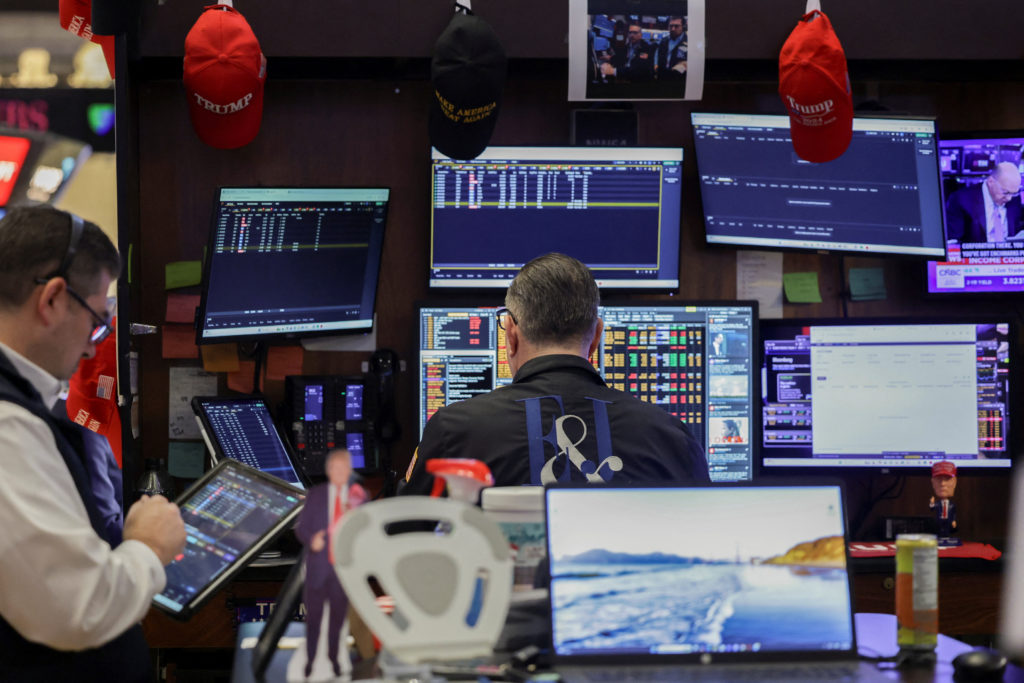
U.S. financial markets turned volatile on Thursday as investors reacted to heightened fears of a widening conflict in the Middle East, with American oil prices climbing above $110 a barrel. The turmoil followed a national address in which President Donald Trump said the United States would continue striking Iran and gave no clear timeline for ending the confrontation.
What Happened
Trading opened with sharp swings across Wall Street as investors weighed the risk that the fighting could disrupt energy supplies, shipping routes, and broader global commerce. The jump in oil prices reflected concern that tensions involving Iran could threaten crude exports from the Gulf region, one of the world’s most important energy hubs.
The president’s remarks added to uncertainty after days of market anxiety tied to the escalating conflict. Rather than signaling a diplomatic off-ramp or a defined military pause, the address suggested continued U.S. action, intensifying worries that the confrontation could last longer and spread further.
Higher oil prices can quickly ripple through the global economy by lifting transportation, manufacturing, and consumer costs. That effect is especially important in economies that depend heavily on imported fuel, including countries across Latin America.
Background
Oil markets are often among the first to react when conflict threatens the Middle East, because the region plays a central role in global energy production and shipping. Even the possibility of attacks on infrastructure, tanker traffic, or key maritime chokepoints can send prices higher within hours.
Wall Street has also become increasingly sensitive to geopolitical shocks as investors try to assess whether military escalation could slow global growth or force central banks to confront new inflation pressures. When energy prices spike, the impact can extend well beyond the oil sector, affecting airlines, logistics firms, retailers, and consumers.
Iran has long been a flashpoint in international security and energy markets because of its role in regional conflicts and its proximity to major shipping lanes. Any sustained confrontation involving the United States and Iran raises the risk of broader instability across the Middle East, with consequences that can reach markets far outside the region.
Why It Matters
For Panama and Latin America, surging oil prices can matter almost immediately. Countries that import most of their fuel face higher transport and electricity costs, which can feed inflation and squeeze household budgets. Panama, while benefiting from its role as a logistics and services hub, is still exposed to global energy shocks that affect shipping, aviation, and consumer prices.
The volatility also matters for trade and maritime traffic. Any escalation that threatens Middle East shipping could add pressure to international supply chains already sensitive to disruptions, from freight costs to delivery delays. For an economy like Panama’s, which depends on the smooth flow of global commerce through the Canal and related logistics networks, prolonged instability in oil markets can create knock-on effects.
More broadly, the market reaction shows how quickly a military conflict can move from the battlefield to Wall Street and into the daily cost of living around the world. As investors search for signs of de-escalation, energy prices are likely to remain one of the clearest indicators of whether the crisis is deepening or beginning to stabilize.