
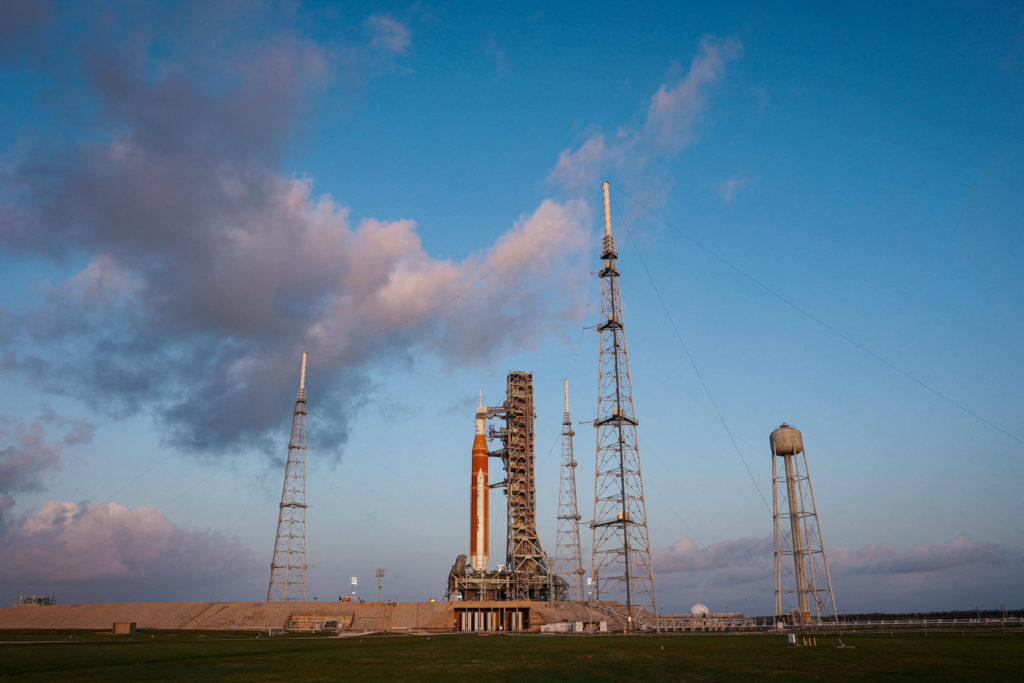
NASA is moving closer to a historic step in its return to deep space, with Artemis II set to carry four astronauts on a lunar fly-around. The mission is designed to test the systems and procedures that will support future crewed landings on the Moon.
What Happened
According to PBS, Artemis II will send four astronauts on a mission around the Moon, echoing the orbital missions that defined the Apollo era. Unlike a landing mission, this flight is intended as a crewed test of NASA’s new lunar exploration system and its readiness for future operations.
The mission marks an important milestone in the Artemis program, which is NASA’s broader effort to return astronauts to the Moon after more than five decades. Artemis II follows earlier uncrewed testing and is meant to demonstrate that the spacecraft and launch system can safely support humans in lunar space.
Background
The Artemis program is NASA’s next-generation lunar initiative, built around the goal of establishing a sustained human presence on and around the Moon. It is widely seen as the successor to Apollo, but with a different emphasis: longer-term exploration, more advanced spacecraft, and a foundation for future missions beyond the Moon.
A crewed fly-around of the Moon is a critical test because it places astronauts farther from Earth than any human mission in decades. Missions like this help engineers evaluate navigation, communication, life support, and reentry performance under conditions that cannot be fully duplicated on Earth.
Space exploration has also become a major arena of international competition and cooperation. The United States is seeking to preserve leadership in lunar exploration, while other countries, including China, are also advancing ambitious Moon programs. That makes each Artemis milestone more than a technical exercise; it is part of a broader geopolitical and scientific contest.
Why It Matters
Artemis II matters because it is a gateway mission. If successful, it will move NASA closer to landing astronauts on the Moon again and eventually building the capabilities needed for deeper-space exploration. The mission will also provide a high-profile test of America’s ability to send humans safely beyond low Earth orbit.
For readers in Panama and Latin America, the story is relevant in a broader scientific and strategic sense. Major NASA missions often inspire regional interest in science education, engineering, and international collaboration in space research. They also reflect the technological competition shaping global power, which has implications for alliances, innovation, and the future of commercial space activity.
While Artemis II will not directly affect daily life in Panama, it is the kind of landmark global science mission that draws worldwide attention. Its success or failure will influence the pace of human exploration of the Moon and the next phase of space travel.