
What Happened
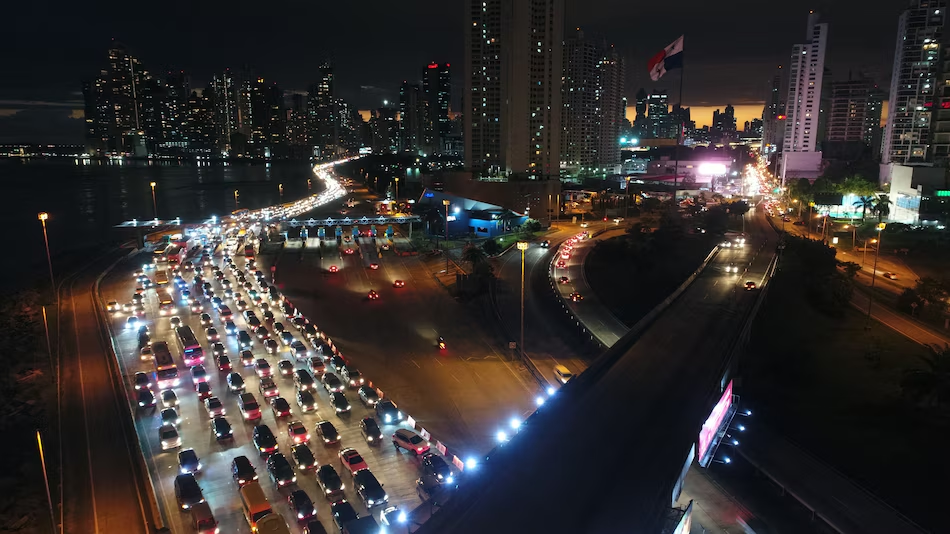
The traffic jam on Panama City’s Southern Corridor is no longer an occasional inconvenience. According to the source article, it has become part of the daily routine for thousands of drivers who rely on the route to reach the city center, their workplaces, or the airport.
The pressure on the corridor is being driven by the rapid growth of residential and commercial areas in the east of the capital. New neighborhoods and developments have increased the number of vehicles using the road every day.
Why Traffic Has Increased
Areas such as Santa María, Metro Park, Tocumen, and Brisas del Golf are among the places cited as contributing to the heavier traffic load. As these communities expand, more residents, workers, and businesses depend on the Southern Corridor as a key connection point.
The article also notes that each new real estate project, logistics park, or corporate center adds more vehicles to the road network, intensifying congestion during peak travel times.
Proposed Expansion Plan
To address the problem, the Southern Corridor expansion project would add two lanes in each direction. That would bring the roadway to a total of four lanes in each direction, significantly increasing capacity along one of the capital’s most important traffic arteries.
The plan also includes improvements to the toll booths, with the goal of preventing bottlenecks that can further slow traffic and worsen backups.
What This Means for Panama City
The article places the cost of solving the congestion problem at upwards of $300 million, underscoring the scale of the challenge. The figure suggests that easing traffic in this part of Panama City will require a major investment in infrastructure rather than a small operational fix.
If carried out, the expansion could improve daily mobility for commuters and support the continued growth of eastern Panama City. It could also help reduce delays for those traveling to and from Tocumen and other key destinations. For now, however, the source article indicates that the problem has already become a defining feature of life for many drivers on the corridor.