
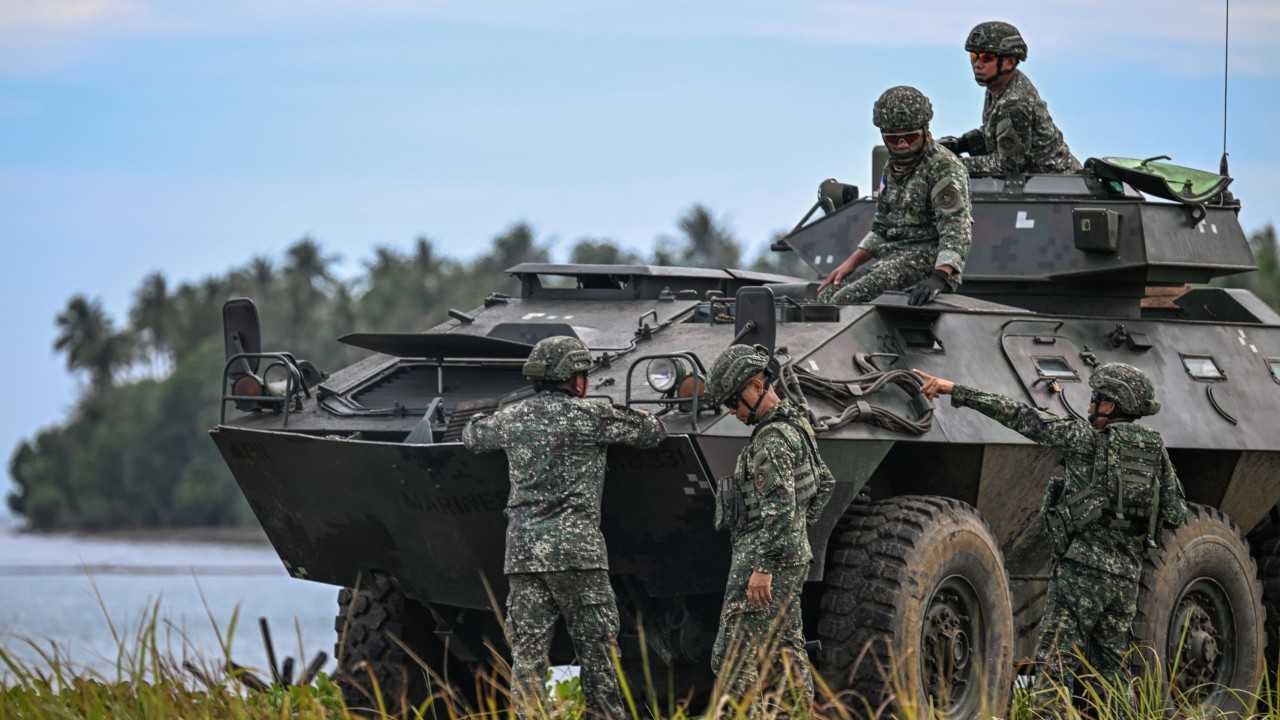
The Philippines needs more than modernization—its military must build real capabilities for defending the country’s territory amid evolving regional security challenges, according to analysis published by the South China Morning Post on March 28, 2026. The argument points to a long-standing mismatch between how the armed forces have been shaped and what they are expected to do today.
What Happened
The article says the Philippines has invested heavily for decades in internal security operations since independence from the United States. It frames this focus as a defining feature of Philippine military development and notes that the armed forces historically did not develop the territorial defense capabilities needed for potential external contingencies.
Because the Philippines relied on Washington’s “security umbrella” for territorial protection until the 1990s, the analysis argues that the military did not have sustained incentives or opportunity to prepare for traditional defense of its own land and maritime zones. The article highlights that this is reflected in the limited record of Philippine forces participating in overseas combat operations.
According to the piece, the Korean War (1950–1953) is cited as the only overseas conflict in which Philippine military forces were deployed in combat operations. That history is presented as evidence of how experience and training priorities have differed from the requirements of territorial defense.
From there, the article emphasizes that a narrow concentration on internal security can leave gaps when the strategic environment demands readiness for external threats. The central claim is that transformation—not only modernization—is required to close those gaps.
Background
The Philippines’ security posture has long been shaped by its relationship with the United States. For much of the post-independence period, the article notes, Philippine defense planning leaned on American protection for territorial defense through the “security umbrella” that lasted until the 1990s. That arrangement, the analysis suggests, reduced the urgency for developing independent territorial defense competencies.
After independence, internal security missions became a central task. As a result, the Philippine military’s capabilities, doctrine, and institutional habits were oriented toward domestic challenges rather than the full spectrum of operations involved in territorial defense against external forces.
The article also places the Philippines’ limited combat experience abroad in a historical context, pointing out that the Korean War is the only overseas conflict where Philippine forces were deployed in combat operations. This detail is used to illustrate how the military’s experience base has not been broadly built through repeated overseas deployments.
In parallel, the broader regional security environment has evolved over time, making territorial defense preparation more consequential than in earlier periods. While the article focuses primarily on the Philippines’ military development history, its argument implies that today’s priorities require capabilities that match territorial defense realities rather than only internal-security requirements.
Why It Matters
The piece’s warning is significant beyond the Philippines because it reflects a wider challenge faced by militaries that have been structured around internal stability missions: shifting toward credible territorial defense can require deep changes in doctrine, training, force structure, and readiness—not just upgrading equipment.
If the Philippines is unable to effectively adapt, the consequences could extend to regional stability in East and Southeast Asia, where territorial issues and security pressures can escalate quickly. The article’s emphasis on “transform” rather than “modernise” underscores that hardware alone does not guarantee deterrence or operational effectiveness.
For Panama and Latin America, the connection is indirect but still relevant: U.S.-partner defense relationships and global security planning increasingly influence international shipping, trade routes, and diplomatic alignment. While the article does not specify an immediate impact on Panama, changes in how a major regional partner prepares for defense can shape broader geopolitical risk and uncertainty that eventually reverberates in global markets.
The core takeaway for readers is that defense modernization debates should be evaluated against operational needs. A military built around internal security may need substantial restructuring to handle territorial defense missions. That transformation, if delayed, can leave countries exposed at moments when regional security demands competence, coordination, and readiness across multiple domains.