
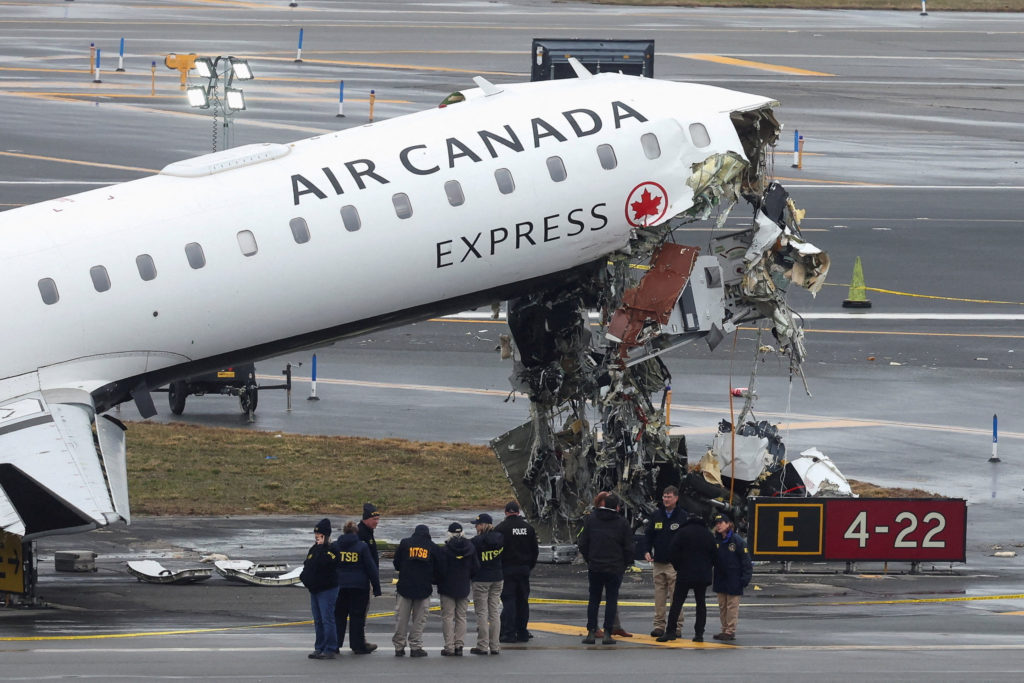
A jet and a firefighting vehicle collided at New York’s LaGuardia Airport, with photos and video from the scene showing the aircraft’s nose crushed and the fire truck tipped onto its side. The images capture the dramatic aftermath of a rare on-airfield collision at one of the nation’s busiest airports.
What Happened
Photos and videos circulated after the incident show a jet with significant damage to its forward fuselage and a fire truck lying on its side. Officials at LaGuardia confirmed a collision occurred between an aircraft and a fire truck on airport property. Visual evidence from the scene is the primary publicly available information released so far.
Background
LaGuardia Airport, located in the borough of Queens in New York City, is one of the metropolitan area’s primary airports and handles large volumes of domestic traffic and connecting passengers. Like other commercial airports, LaGuardia operates and coordinates runway movements, ground vehicles and emergency response units including firefighting apparatus that serve to protect aircraft and passengers during routine operations and emergencies.
Collisions involving aircraft and ground vehicles are uncommon but pose serious safety risks when they occur. Airport emergency vehicles are typically equipped and staffed to respond quickly to incidents, and airports maintain procedures to manage vehicle movement on runways, taxiways and apron areas to prevent conflicts with aircraft operations.
Why It Matters
Any collision between an aircraft and an airport vehicle raises immediate safety and operational concerns. Visible structural damage to an aircraft’s nose can suggest the need for substantial repairs and a formal technical inspection before the plane could return to service. A fire truck on its side similarly indicates a severe impact and potential equipment loss for the airport’s emergency response fleet.
Beyond the immediate safety implications, incidents on the airfield can disrupt airport operations. Runway or taxiway closures, recovery of damaged equipment, and subsequent inspections can delay flights and create knock-on effects across airline schedules. Given LaGuardia’s role in the U.S. air travel network, disruptions there can ripple through domestic connections and, indirectly, international itineraries that use New York as a hub.
Such events commonly lead airport authorities and federal regulators to review procedures, vehicle movement protocols and communications to determine causes and to reduce the chance of recurrence. While details about injuries, the number and types of aircraft involved, or the sequence of events have not been publicly released in full, the visual record of heavy damage underscores the seriousness of the collision.
For travelers, the incident is a reminder of the complex coordination required on busy airfields between aircraft operations and ground services. For airport operators and regulators, it highlights the ongoing importance of strict ground-movement controls and emergency preparedness to protect passengers, crews and ground personnel.