
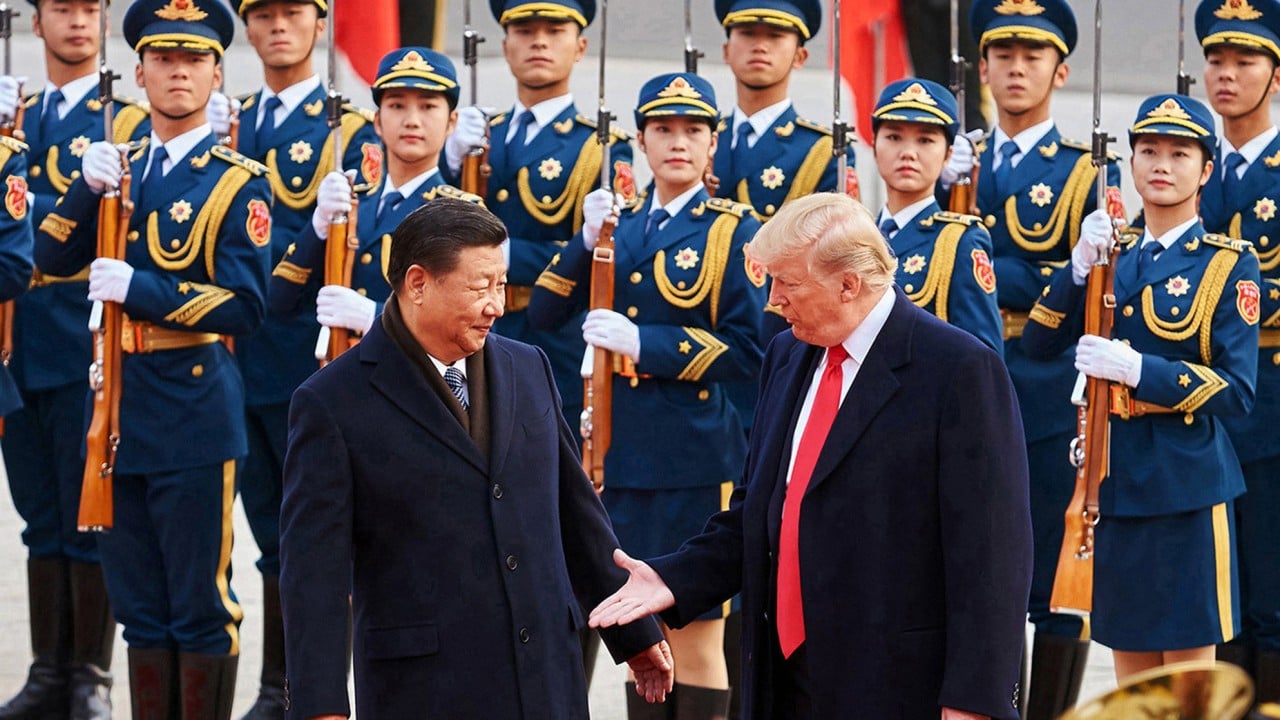
US President Donald Trump has asked to push back a long‑anticipated summit with Chinese leader Xi Jinping in Beijing by “a month or so,” the White House said, citing an escalating war with Iran and urgent efforts to reopen the Strait of Hormuz. Media reporting, however, suggests the postponement reflects months of growing frustrations and mismatched expectations between Washington and Beijing.
What Happened
The official explanation for the change of date is straightforward: the White House said President Trump requested the delay so he can remain in the United States to manage fallout from the escalating conflict with Iran, including efforts to restore safe passage through the Strait of Hormuz. The summit had been billed as a major bilateral meeting with Xi Jinping in Beijing, but that engagement is now set back by roughly a month, according to official statements reported by the South China Morning Post.
Beyond the White House account, reporting points to a more complex backdrop. The SCMP notes that the schedule change comes amid months of mounting frustrations and mismatched expectations between the two capitals — factors that can complicate the logistics and timing of high‑level diplomacy even when leaders want to meet.
Background
Summits between US and Chinese leaders carry outsized diplomatic importance because they offer opportunities to manage competition, negotiate on trade and technology, and coordinate on global crises. The planned Beijing meeting had been described as long‑anticipated, reflecting continued interest on both sides in direct leader‑level engagement despite tensions.
The Strait of Hormuz, cited by the White House as central to the decision, is a key maritime chokepoint through which a substantial share of the world’s seaborne oil shipments transit. Disruptions there can ripple through global energy markets and raise concerns about supply security — a reason national leaders and foreign ministries often prioritize urgent responses to incidents in the waterway.
Why It Matters
A postponed summit sends signals beyond calendar logistics. If the White House explanation is the principal cause, the delay highlights how concurrent security crises — especially conflicts that threaten maritime routes and energy supplies — can force top leaders to focus inward. If, as reporting suggests, deeper diplomatic friction and mismatched expectations are contributing factors, the delay may reflect harder-to-resolve differences in priorities, sequencing and outcomes both sides want from a high‑profile meeting.
For Latin America and Panama, the immediate connection is indirect but real: instability that affects global shipping lanes and energy prices can alter shipping costs, fuel prices and trade flows. Panama, whose economy depends heavily on the Canal and maritime services, watches disruptions to global routes and commodity markets closely. A U.S. president remaining at home to manage a broader regional or global security crisis can also shift the tempo of international diplomacy, potentially delaying agreements or initiatives with spillover effects for trade, investment and geopolitical alignment in the Western Hemisphere.
Ultimately, moving the summit by a month or so buys time — for crisis management, for diplomatic recalibration, or both. Whether the postponement dissipates tensions or crystallizes deeper disagreements will depend on developments in the Iran conflict, the pace of any diplomatic engagements to secure the Strait of Hormuz, and bilateral negotiations between Washington and Beijing over the summit’s aims and agenda.