
What Happened
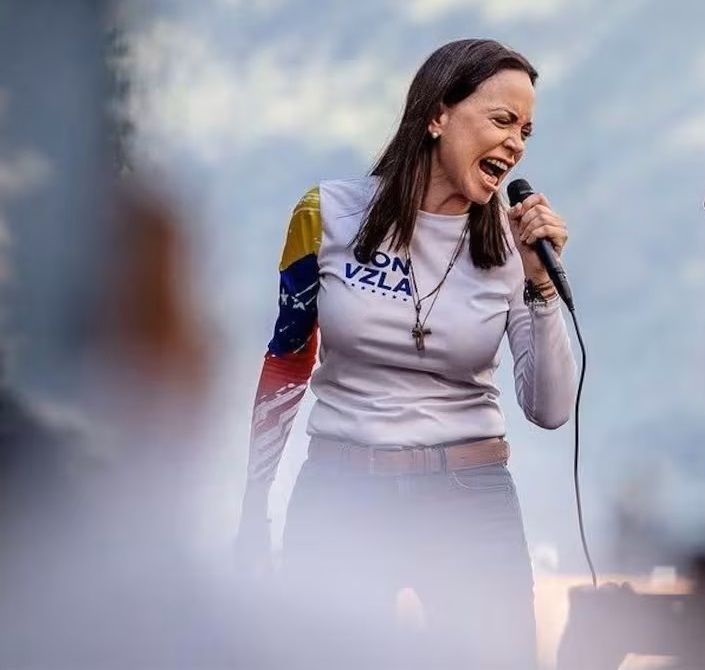
Venezuelan opposition leader and 2025 Nobel Peace Prize laureate María Corina Machado used a public appearance in Panama on Saturday to restate her central political goal: a democratic transition in Venezuela built around a “clean and free presidential election” in which citizens can vote from inside the country and abroad. Machado said her movement has a mandate, a strategy, and organized support as it seeks to replace the current political order with new institutions and internationally supervised elections.
Her message in Panama came as she presented herself not only as a symbol of opposition to Nicolás Maduro’s rule, but also as a leader focused on the practical mechanics of a transition. That includes appointing a new electoral council, creating secure manual voting procedures, and allowing Venezuelans in exile to participate in the process.
The Transition Plan
Machado said a fully transparent election could be organized in about seven to nine months once political decisions are made and a new electoral council is appointed. The timeline reflects the scale of the challenge: Venezuela’s election system would need to be rebuilt in a way that opposition forces and international observers consider credible after years of deep distrust in state institutions.
She has also framed the transition as more than a one-day vote. Her vision includes restoring the rule of law, re-establishing property rights, and shifting the economy back toward free-market principles. Those priorities are aimed at reversing the damage caused by years of political conflict, economic collapse, and the erosion of public institutions.
Why Panama Matters
Panama is a natural stage for this message because it sits at the center of regional migration and political discussion about Venezuela. The country has received Venezuelans over the years, and Machado’s insistence on voting rights for citizens abroad speaks directly to the large diaspora spread across Latin America and beyond. For many families, the issue is not only political change but also the possibility of returning home safely.
Machado said her movement wants to create conditions for the estimated 9 million Venezuelans forced into exile to return to a stable and prosperous country. That goal adds a human dimension to the transition debate: a future government would face the immediate task of restoring confidence, rebuilding basic services, and reuniting families separated by migration.
Background and Next Steps
Machado has become the most visible face of Venezuela’s opposition and has anchored her political message in the claim that past elections already showed overwhelming support for change. Her current push is to convert that claim into a new, internationally recognized vote under different rules and with broader participation.
For Panama and the wider region, the next steps to watch are whether opposition unity holds, whether international actors continue to back a negotiated transition, and whether any concrete mechanism emerges for electoral reform. If the process moves forward, the issue will be less about slogans than about institutions: the electoral council, voting access, and guarantees that the result is accepted at home and abroad.
Machado’s appearance in Panama underscored that Venezuela’s political crisis remains a regional matter, with implications for migration, trade, and democratic norms across Central and South America.