
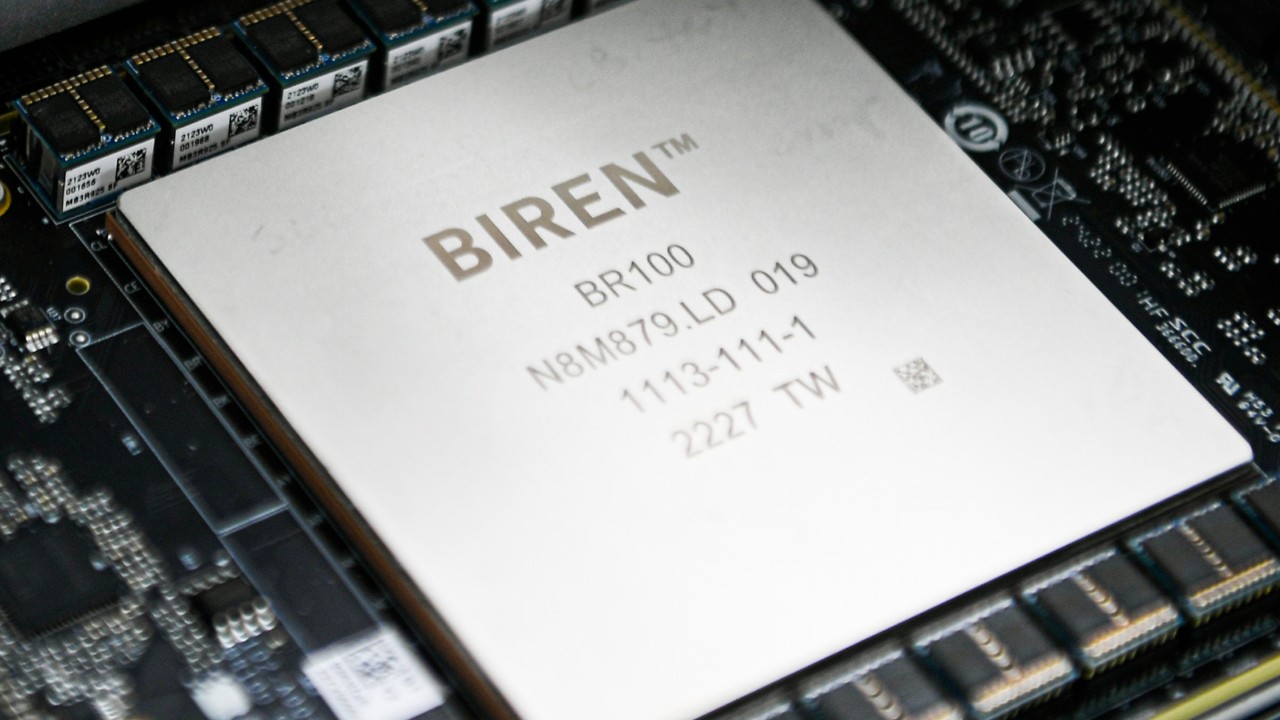
Two of China’s leading homegrown graphics processing unit makers, Biren Technology and Iluvatar CoreX, reported sharp revenue growth in 2025 as Beijing intensifies efforts to build a domestic semiconductor industry that can compete with Nvidia and other global players. But the latest results also show how difficult that race remains, with both companies still in the red despite stronger demand.
What Happened
Biren Technology said annual revenue climbed 207.2% from a year earlier to 1.03 billion yuan, or about US$149 million, according to its first earnings report since listing in January. The figure beat the consensus estimate of 954.5 million yuan.
Iluvatar CoreX, Biren’s crosstown rival, also posted triple-digit growth, according to the source report, underscoring the rapid expansion of China’s AI chip sector as local companies look for alternatives to Nvidia amid tighter technology restrictions and a broader push for self-sufficiency.
Even so, the two firms continue to face substantial losses. The source report indicates that strong sales have not yet translated into profitability, a sign that China’s domestic GPU challengers are still spending heavily on research, development, and expansion while competing in a market dominated by far larger global rivals.
Background
Graphics processing units, or GPUs, are central to artificial intelligence systems because they handle the massive computing loads needed to train and run advanced models. That has made the sector strategically important far beyond consumer electronics, placing it at the center of the rivalry between the United States and China over advanced semiconductor technology.
China has been working for years to reduce dependence on foreign chip suppliers, especially in areas where export controls have limited access to cutting-edge products. In that environment, domestic firms such as Biren and Iluvatar CoreX have become symbols of a broader national effort to develop competitive AI hardware at home.
The companies’ listing in January also matters. Public market access can give chip makers a larger funding base, which is important in an industry where development cycles are long, costs are high, and profitability often arrives only after years of scaling production and winning major customers.
Why It Matters
The results show that China’s chip self-sufficiency drive is producing commercial momentum, even if the financial picture remains fragile. Triple-digit revenue growth suggests rising demand for domestic AI hardware, especially as Chinese technology firms look to build around supply constraints and geopolitical uncertainty.
For the broader global market, the report highlights the growing pressure on Nvidia’s position in one of the world’s largest technology markets. For China, it also reinforces how much the AI race depends not only on software and talent, but on access to advanced computing hardware.
There is also a wider trade and policy angle that matters for Panama and Latin America. Any escalation in US-China technology controls can ripple through global supply chains, investment flows, and the cost of digital infrastructure that regional businesses and governments increasingly depend on. As AI adoption expands across Latin America, the availability and price of chips will remain part of the region’s economic outlook.
For now, Biren and Iluvatar’s results suggest that China’s domestic chip challengers are gaining ground in sales, even if they are still far from proving they can turn that momentum into durable profit.