
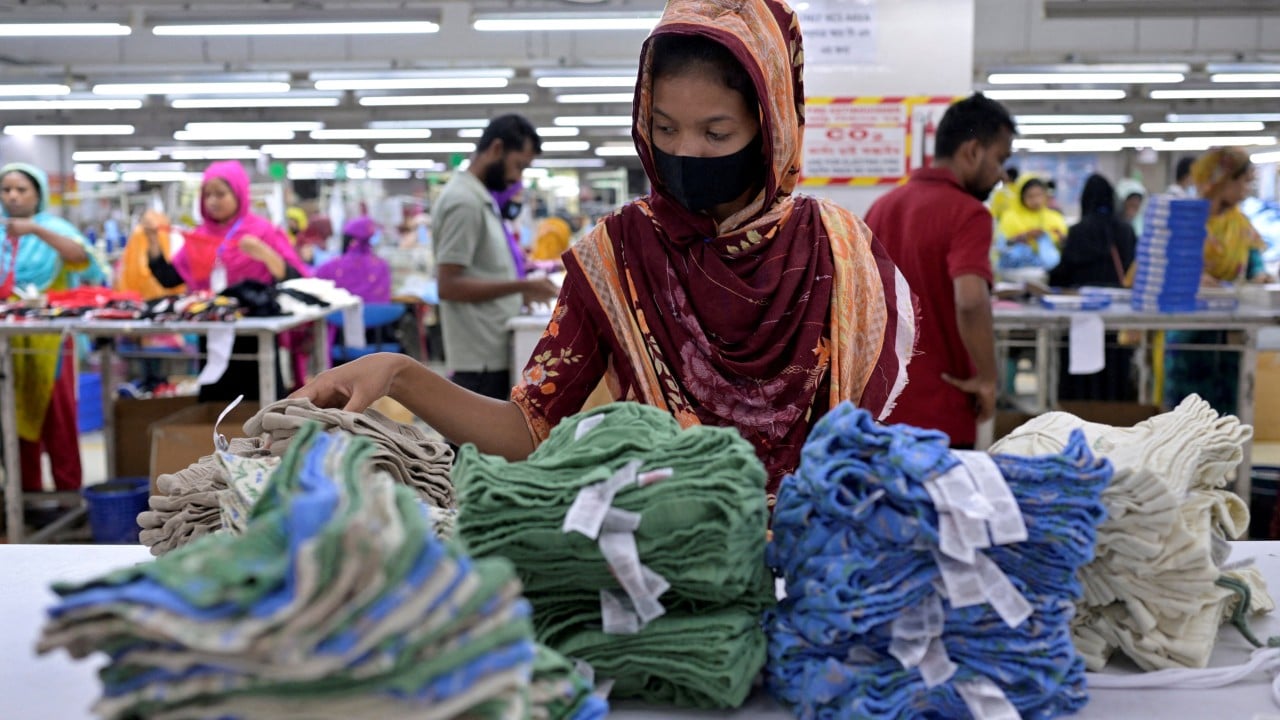
A South China Morning Post analysis argues that Bangladesh’s vast garment industry — employing around 4 million workers and responsible for more than 80% of the country’s export earnings — may represent the last large-scale success of Asia’s labour-intensive, export-led development model. The sector contributes roughly 11% of Bangladesh’s GDP, and the taxes and economic activity it supports help fund public schools and basic healthcare.
What Happened
Bangladesh’s garment industry has become central to the nation’s economy. According to reporting in the South China Morning Post, roughly 4 million workers are employed in the sector. Garment exports generate more than four-fifths of the country’s export earnings and contribute about 11% of gross domestic product.
The industry does more than produce clothing for foreign markets: the wages paid to workers and the broader supply chains built around the factories have created a tax base. Those tax revenues, together with the domestic economic activity sustained by the sector, fund a meaningful share of public services such as basic healthcare and public education.
Background
Asia’s development model over the past half-century often relied on labour-intensive manufacturing for export markets to drive growth, employment and fiscal revenues. Countries moved from agriculture into factories, used cheap labour to attract foreign buyers, and built state capacity as exports grew. That pathway helped lift millions out of extreme poverty across multiple Asian economies.
Bangladesh’s experience follows that pattern: a low-cost workforce attracted global brands and buyers, generating sustained export income. Over time, the sector’s scale has allowed the state to collect taxes and expand basic public services, creating visible development gains.
But the global context that once made low-cost manufacturing a straightforward route to growth has shifted. Rising competition from other low-cost economies, global supply-chain reconfiguration, technological change and the pressure to upgrade production standards all complicate the model. These trends have prompted analysts to ask whether large-scale, labour-intensive export manufacturing can still deliver the same social and fiscal outcomes it did in previous decades.
Why It Matters
If Bangladesh does represent a late-stage example of Asia’s export-led development model, the implications reverberate beyond Dhaka. The country’s ability to convert a labour-intensive industry into a dependable tax base and fund public services highlights how manufacturing can contribute to state capacity and social provision. That linkage — from factories to fiscal resources to basic services — is central to why export-led growth mattered for earlier Asian development successes.
At the same time, the pressures facing Bangladesh’s garment sector underscore risks for countries that remain heavily dependent on a single low-cost export industry. Shifts in global demand, automation of routine factory tasks, and competition from other producing countries could erode margins and employment over time. For policymakers, the lesson is twofold: diversify the economic base and capture sufficient domestic revenues from existing industries to invest in human capital and infrastructure.
For readers in Panama and Latin America, Bangladesh’s story is a reminder of both the potential and the limits of relying on low-cost manufacturing as a development strategy. While the region’s trade and economic ties to South and East Asia differ from those of Bangladesh, governments across Latin America face similar challenges in building resilient tax bases, creating quality jobs, and ensuring that export sectors translate into improved public services.
Whether Bangladesh will sustain its current gains or transition into higher-value manufacturing and services remains a pivotal question. The country’s garment industry has already done more than generate exports: it has underpinned a portion of the state’s capacity to finance basics such as education and healthcare. How Dhaka manages global competition, workplace standards and economic diversification will determine whether this model endures, evolves, or gives way to new paths to shared prosperity.