
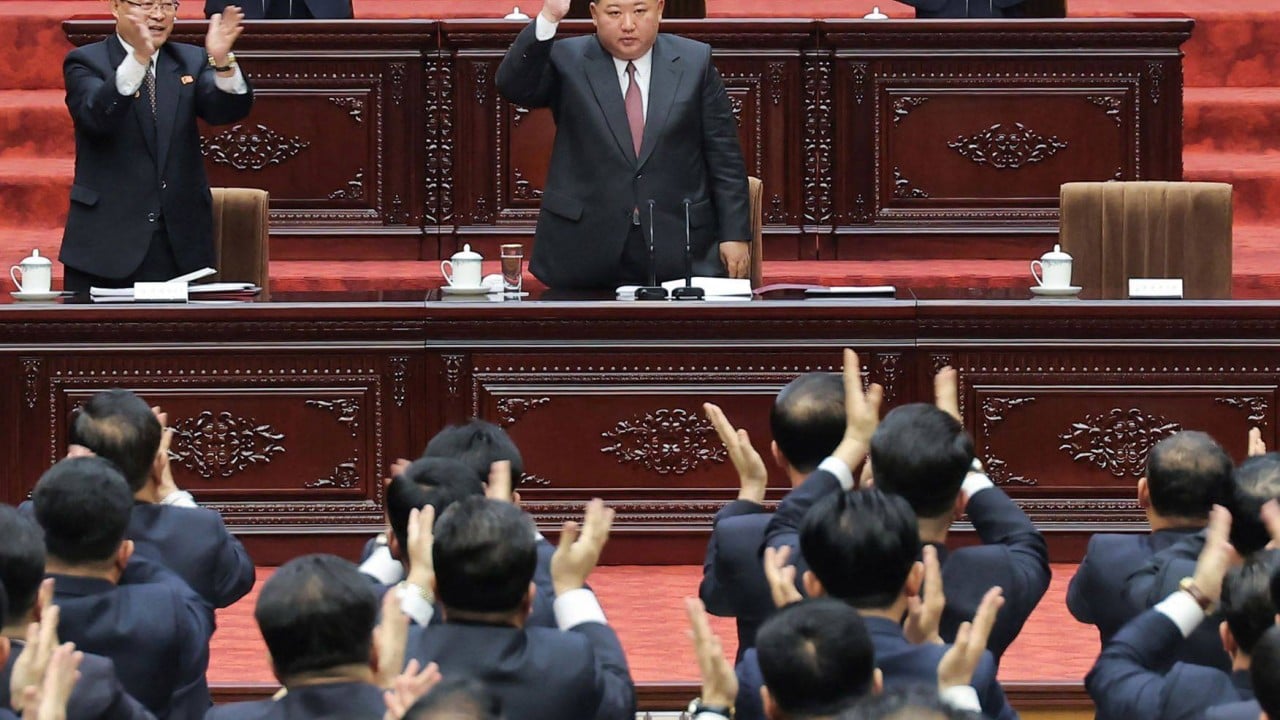
North Korea’s leader Kim Jong-un was reappointed as the country’s president of state affairs, state media reported on Monday, following the opening session of the Supreme People’s Assembly. The move reinforces Kim’s formal status under the DPRK constitution as the country’s supreme leader and consolidates continuity at the top of the isolated state’s political structure.
What Happened
State media said Kim Jong-un was reappointed to the position of president of state affairs after North Korea convened the first session of its Supreme People’s Assembly a day earlier. The official account notes that the post, defined in the country’s constitution, designates the holder as the “supreme leader of the DPRK” and the representative of the state. The announcement was carried by North Korean state outlets and follows the formal legislative session where such appointments are routinely recorded.
Background
The Supreme People’s Assembly (SPA) is North Korea’s highest legislative body and meets to take formal votes that confirm top leadership roles and state appointments. Under the constitution, the president of state affairs holds the title of supreme leader and represents the Democratic People’s Republic of Korea in state affairs. While the SPA is the venue for formalizing leadership positions, analysts and historians have long noted that substantive policymaking and command rest with the country’s ruling party and the leader himself.
Kim Jong-un has led North Korea for more than a decade, presiding over the country’s centralized, authoritarian system. The reappointment at the SPA is part of the institutional procedure by which Pyongyang publicly affirms leadership authority. State media and official announcements are the primary channels through which the government communicates such decisions to both domestic and international audiences.
Why It Matters
The reappointment reaffirms continuity at the highest level of the DPRK’s political order. For regional governments and international observers, formal confirmation of Kim’s role signals that existing leadership priorities and strategic directions are likely to endure. That matters for issues where North Korea figures prominently in regional security discussions—most notably nuclear and missile programs, diplomatic postures toward the United States and South Korea, and relations with China and other neighbors.
For readers in Panama and across Latin America, the development underscores the persistence of an entrenched leadership in a state often at the center of geopolitical tensions. While the appointment is an internal constitutional step in Pyongyang, it has downstream implications for international diplomacy and multilateral efforts to address security and humanitarian concerns connected to the DPRK.
Ultimately, the SPA session and the state media announcement serve both a legal and symbolic purpose: legally documenting leadership status under the constitution and symbolically projecting stability and continuity in a regime that remains tightly controlled and isolated from much of the international community.